AirCRAFT Lab CARE (concept design)
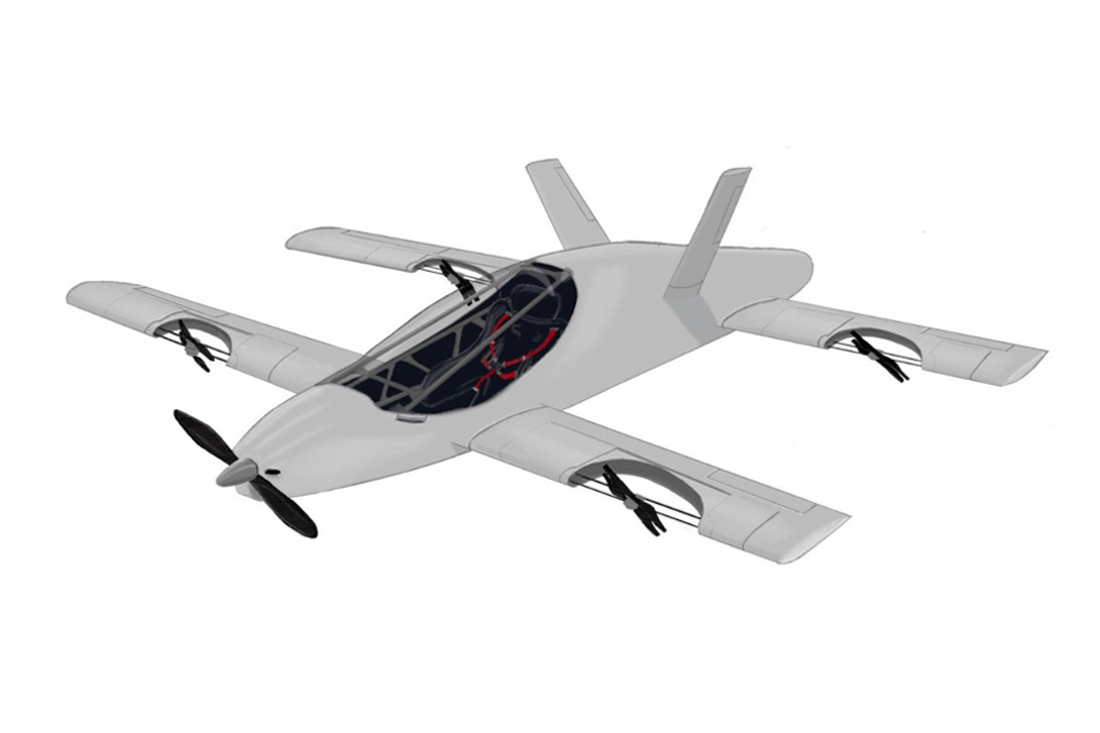
(Image credit: AirCRAFT Lab)
CARE (concept design)
AirCRAFT Lab
St. Louis, Missouri, USA
www.aircraft-lab.org
Founded in March 2024, faculty and students at Saint Louis University created the Aircraft Computational and Resource Aware Fault Tolerance (AirCRAFT) Lab to AirCRAFT Lab to develop a fully autonomous tandem-wing hybrid-electric vertical takeoff and landing (VTOL) aircraft designed transport a paramedic and medical supplies for medical emergencies, natural disasters or other humanitarian causes. The name of the aircraft was named Critical Action Rescue Extraction Drone (CARE).
The team won the GoAERO Stage 1 award in 2025 and was one of 14 NASA University Innovation Award winners. The AirCRAFT Lab team consisted of seniors majoring in Aerospace Engineering in Saint Louis University’s School of Science and Engineering. A grant from GoAERO with support from NASA’s University Innovation project funded the project.
It was reported that the faculty and students made a one-third subscale wooden prototype. The subscale prototype is six feet long and is built to carry approximately six pounds (2.72 kilograms) of payload. The team worked together to build the model. Roudebush, Okeke and Lacroix led the manufacturing process of the fuselage and Arndt and Mercier led the fabrication of the wings and tail sections. Lacroix was additionally in charge of the engine and propulsion systems. There were no reports if the aircraft actually flew.
Critical Action Rescue Extraction Drone (CARE) hybrid-electric VTOL aircraft (concept design)
The Critical Action Rescue Extraction Drone (CARE) autonomous one passenger hybrid-electric VTOL aircraft is a tandem wing aircraft with VTOL propellers and a tractor propeller (a front propeller) for forward flight. The aircraft has been designed to fly autonomously or remotely. The advantage of this aircraft is a paramedic or other emergency personnel can load the aircraft with the required medical supplies, get in the aircraft and fly to its destination without a pilot.
The lift+cruise aircraft has an estimated cruise speed of 100 mph (161 km/h) and has a potential maximum payload weight of 300 lb (136 kg). The aircraft has one tractor propeller, has eight stacked VTOL-only propellers, nine electric motors and is powered by a hybrid-electric power source. There is a canopy over cockpit allowing excellent views for the paramedic when in flight. The aircraft has tandem wings and has two V shaped vertical stabilizers. The fuselage is made from carbon fiber composite to give the aircraft a high strength to low weight ratio. The aircraft will either have fixed tricycle wheeled landing gear or retractable tricycle wheeled landing gear. The aircraft has been designed to land in unprepared landing areas.
About the GoAERO Prize Competition
The GoAERO Prize, sponsored by Boeing, is a three year competition (2024-2027) offering over $2 million USD in prizes that challenges engineers worldwide to create portable, versatile and autonomy-enabled Emergency Response Aircraft that address not only everyday medical emergencies but also to be used in natural disasters, humanitarian emergencies and climate crises worldwide. Each team designs and builds autonomous Emergency Response aircraft capable of delivering a first responder, medical equipment and supplies and ultimately evacuating victims in need to a rescue ambulance or hospital.
More than 150 teams from around the globe are competing for the GoAero prizes. The GoFly and GoAERO prizes were developed by Boeing and other organizations to help the nascent advanced air mobility (AAM) industry move forward.
Specifications:
- Aircraft type: Passenger hybrid-electric VTOL aircraft (concept design)
- Piloting: Autonomous
- Capacity: 1 paramedic or rescue personnel
- Cruise speed: ~100 mph (161 km/h)
- Maximum payload weight: ~300 lb (136 kg)
- Propellers: 1 tractor propeller and 8 stacked in-wing propellers
- Electric motors: 9 electric motors
- Power source: Hybrid-electric power source
- Fuselage: Carbon fiber composite
- Window: Canopy over cockpit
- Wings: Tandem wings
- Tail: 2 V shaped vertical stabilizers
- Landing gear: Fixed tricycle wheeled landing gear or retractable tricycle wheeled landing gear
- Safety features: Distributed Electric Propulsion (DEP) uses multiple propellers or electric ducted fans, each powered by electric motors, to increase safety through redundancy. If one or more components fail, the remaining ones can still ensure a safe landing. There are also redundancies of critical components in the sub-systems of the aircraft providing safety through redundancy. Having multiple redundant systems on any aircraft decreases having any single point of failure. The aircraft has no moving surfaces or tilting parts when transitioning from vertical to forward flight and the reverse which increases safety by reducing complexity. However, the aircraft's wings and vertical stabilizers have been designed with working flaps.
Resources:
- AirCRAFT Lab website
- AirCRAFT Lab Instagram
- AirCRAFT Lab LinkedIn
- Article: GoAERO Launches $2M+ VTOL Challenge, Electric VTOL News, Feb. 12, 2024
- Article: Stage 1 Winners, GoAero, Feb. 11, 2025
- Article: AirCRAFT Lab, GoAero, Feb. 11, 2025
- Article: GoAERO Announces Eleven Stage 1 Winners, Aero News Network, Feb. 16, 2025
- Article: GoAERO Global Emergency Response Flyer Competition Announces $500,000 of Awards to Innovators Worldwide with Support from Boeing, NASA, RTX, and Honeywell, GoAero, Feb. 18, 2025
- Article: GoAERO Awards $500,000 to Stage 1 Teams, Vertiflite Magazine, Mar/Apr 2025
- Article: AirCRAFT Lab Students at Saint Louis University Build Emergency Response Flyer, Saint Louis University, April 20, 2025
- Article: Meet the Teams: AirCRAFT Lab of St. Louis University, GoAero, May 27, 2025
- Article: SLU AirCRAFT Lab's Unmanned Aerial System Named Most Innovative at Recent Competition, St. Louis University, Nov. 5, 2025

Recent Pages
- Aerotrem Technologies Urban Rescue Mark IV (concept design)
- Aerotrem Technologies Urban Rescue Mark III (concept design)
- Aerotrem Technologies Urban Rescue Mark I (concept design)
- 4Front Robotics Navig8 (concept design)
- Tatsumi Huam Earthquake Rescue (concept design)
- Sora Aviation Limited S-1 (concept design)
- Gridiron Robotics Gridiron Flyer (concept design)
- Virginia Tech Rescue Bird (concept design)
- Eagle Team M.A.R.VI.N. (concept design)
- Peters RIVIR (concept design)