Peters RIVIR (concept design)
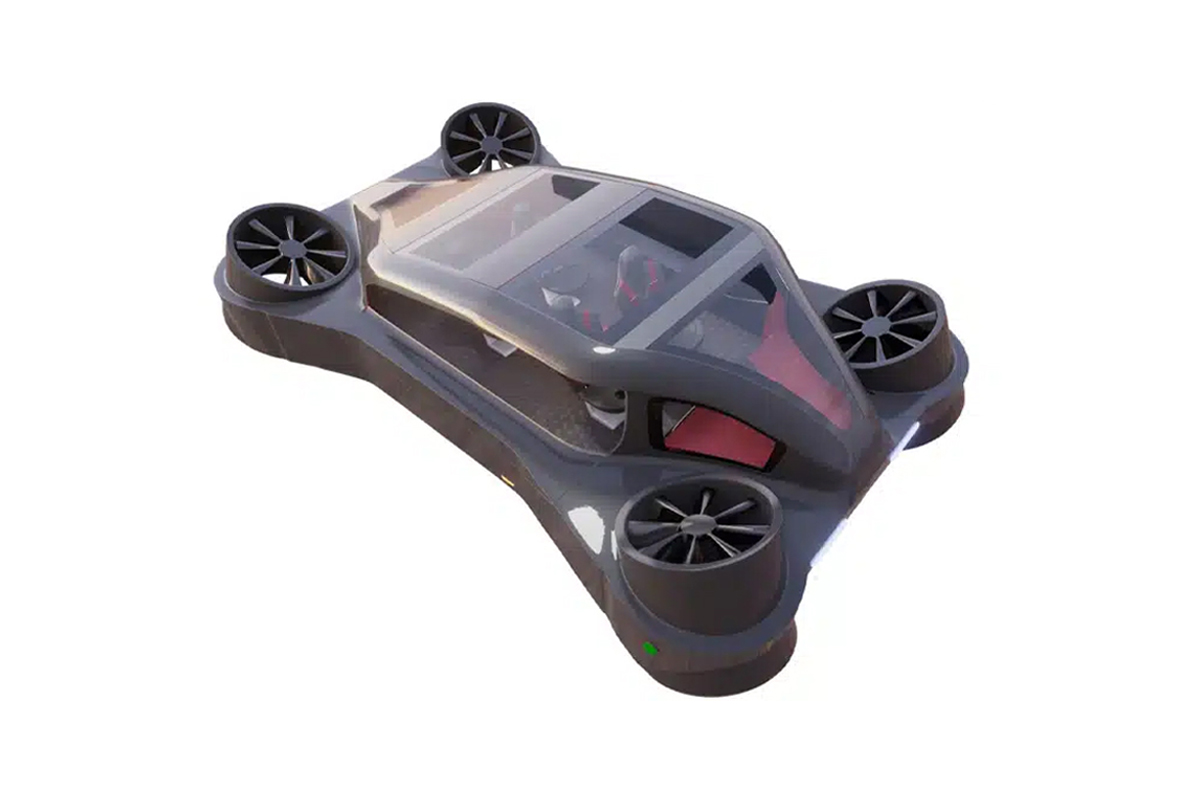
(Image credit: Shern Peters)
RIVIR (concept design)
Peters
United States
website unknown
Shern Peters heads Team RIVIR for the GoAERO Prize competition (2024-2027) sponsored by Boeing, NASA and other companies offering over $2 million in prizes for contestants to develop autonomous emergency response electric vertical takeoff and landing (eVTOL) or hybrid-electric VTOL aircraft. The contestants are designing advanced air mobility (AAM) aircraft that can fly in extreme natural disasters. These aircraft are needed in these emergencies because helicopters are unable to fly in dangerous rescue zones. As of 2025, Peters is is looking for investors.
Team RIVIR entered their passenger emergency response hybrid-electric VTOL aircraft for the contest. Although the team was not selected as a Stage 1 or Stage 2 prize winner, the project demonstrated the team's approach to emergency response aircraft design.
RIVIR passenger hybrid-electric VTOL aircraft (concept design)
The RIVIR is a passenger hybrid-electric VTOL aircraft. The aircraft carries one pilot, three passengers and their luggage. The cabin is spacious enough to give passengers some breathing room when on board the aircraft. The name RIVIR stands for Rapid Intervention Vehicle for Immediate Response.
The aircraft's cruise speed is estimated to be 161 km/h (100 mph), has a predicted maximum speed of 257 km/h (160 mph) and has a target maximum range of 161 km (100 m). The aircraft has an intended flight time of one hour traveling at normal cruise speed. The aircraft has eight electric ducted fans (EDFs), eight electric motors and is powered by a hybrid-electric power source. The empty weight of the aircraft is calculated to be 680 kg (1,500 lb), has a predicted maximum payload weight of 454 kg (1,000 lb) and has an expected maximum takeoff weight of 1,134 kg (2,500 lb). The fuselage is made from carbon fiber composite to give the aircraft a high strength to low weight ratio. The aircraft has fixed skid landing gear.
The inventor foresees the aircraft to be used for a wide variety of air missions such as on-demand air taxi service, emergency medical service, air racing, air cargo service, search and rescue, surveillance and reconnaissance, police work and firefighting. The company hopes to start production of the aircraft near the end of 2026 and Peters predicts the base cost of the aircraft will be $1 million USD.
About the GoAERO Prize Competition
The GoAERO Prize, sponsored by Boeing, is a three year competition (2024-2027) offering over $2 million USD in prizes that challenges engineers worldwide to create portable, versatile and autonomy-enabled Emergency Response Aircraft that address not only everyday medical emergencies but also to be used in natural disasters, humanitarian emergencies and climate crises worldwide. Each team designs and builds autonomous Emergency Response aircraft capable of delivering a first responder, medical equipment and supplies and ultimately evacuating victims in need to a rescue ambulance or hospital.
More than 150 teams from around the globe are competing for the GoAero prizes. The GoFly and GoAERO prizes were developed by Boeing, NASA and other organizations to help the nascent advanced air mobility (AAM) industry move forward.
Specifications:
- Aircraft type: Passenger hybrid-electric VTOL aircraft (concept design)
- Piloting: 1 pilot
- Capacity: 3 passengers and their luggage
- Cruise speed: 161 km/h (100 mph)
- Maximum speed: 257 km/h (160 mph)
- Maximum range: 161 km (100 m)
- Flight time: 1 hour (at cruise speed)
- Empty weight: 680 kg (1,500 lb)
- Maximum payload weight: 454 kg (1,000 lb)
- Maximum takeoff weight: 1,134 kg (2,500 lb)
- Propellers: 8 electrid ducted fans (EDFs), stacked
- Electric motors: 8 electric motors
- Power source: Hybrid-electric power source
- Fuselage: Carbon fiber composite
- Fuselage dimensions: Length 5.8 m (19 feet), Width 3.7 m (12 feet), Height 1.8 m (6 feet)
- Window: Canopy over cockpit, allowing forward, top, left and right visibility for spectacular views for the pilot and passengers
- Landing gear: Fixed skid landing gear
- Safety features: Distributed Electric Propulsion (DEP) uses multiple propellers or electric ducted fans, each powered by electric motors, to increase safety through redundancy. If one or more components fail, the remaining ones can still ensure a safe landing. There are also redundancies of critical components in the sub-systems of the aircraft providing safety through redundancy. Having multiple redundant systems on any aircraft decreases having any single point of failure. There is also a whole aircraft emergency ballistic parachute in case of an unexpected inflight emergency.
Resources:
- Rivir website unknown
- Article: Meet the Teams: Team RIVIR, GoAERO, May 28, 2025

Recent Pages
- aeroG Aviation AG-8 (concept design)
- NASA Skylark (concept design)
- CoolFly Urban 4 (concept design)
- CoolFly Standing Flight Platform (prototype)
- CoolFly Urban 3 (prototype)
- CoolFly Urban 2 (concept design)
- CoolFly Urban (production model)
- CoolFly Dream ST (production model)
- CoolFly Dream Pro (production model)
- CoolFly Dream (prototype)