Bivect Air Odyssey (concept design)
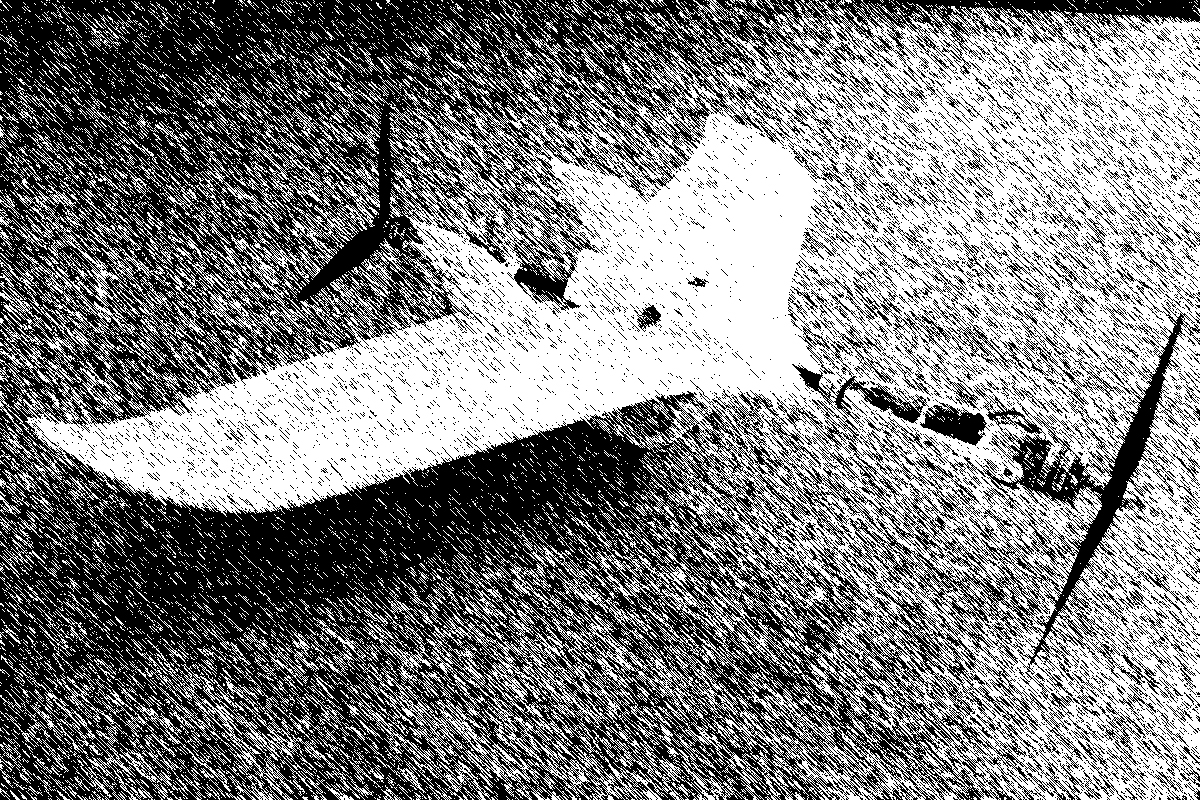
(Image credit: Bivect Air)
Odyssey (concept design)
Bivect Air, Inc.
Sainte-Marie-Saint-Raphaël, New Brunswick, Canada
www.gary-gress.pixels.com
Gary Robert Gress, a Canadian mechanical engineer and lifelong aviation innovator is the sole principal of Bivect Air. Gress has has developed multiple two propeller passenger electric vertical takeoff and landing (eVTOL) for advanced air mobility. His approach to aircraft design blends decades of aerospace engineering experience with a deep curiosity for vertical takeoff and landing (VTOL) history—from early helicopter concepts to modern gyroscopic control systems. Gress has participated in both the GoFly and GoAERO competitions.
Some background information about Gress
After retiring around 2012, he returned to school to complete his M.Sc. and Ph.D. in Mechanical Engineering at the University of Calgary, with the goal of fully understanding the control of hovering aircraft. His design teacher, who was not in the aerospace industry, taught Gary an invaluable lesson that has spurred him to continue even when he confronts seemingly insurmountable barriers. He once said to the class: "It takes a lot of work to make something simple," he remembers. "I think that is so true and it applies everywhere.," Gress said.
Transitioning eVTOL Aircraft with Augmentative Cross-Modal Elements White Paper
Gress presented "Transitioning eVTOL Aircraft with Augmentative Cross-Modal Elements" at Forum 80, sponsored by the Vertical Flight Society, May 7–9, 2024, Montréal, Québec, Canada. His proposition boiled down, is that two propellers are the right amount of propellers for an eVTOL aircraft with respect to weight and drag considerations. That is, each addition propeller increases weight and drag for the aircraft. In addition, Gress states that two propellers are sufficient for hovering due to what is called active tilting. Active tilting involves the use of the propellers’ gyroscopic, momentum-wheel and drag-torque moments which keeps the aircraft stable during hovering. Three of several aircraft that he cites in the paper are his own prototype aircraft, the AW609 tilt-rotor and the Agusta-Westland Project Zero.
Odyssey high-speed long-range passenger eVTOL tilt-propeller (concept design)
The Odyssey is a high-speed long-range one passenger eVTOL tilt-propeller aircraft for recreational, personal or commercial use. The aircraft has been designed to hold the pilot and their luggage. If a production model was ever made, there would be a canopy over the cockpit allowing excellent views for the pilot. The above image is the concept design of the eVTOL aircraft in forward flight mode.
The estimated cruise speed is 362 km/h (225 mph) and has an expected maximum speed of 483 km/h (300 mph). The flight time is projected to be 45-60 minutes at a cruise speed of 362 km/h (225 mph). The maximum hover time for the eVTOL is calculated at 15 minutes. The aircraft has two counter-rotating tandem propellers that tilt in all directions, has two electric motors and is powered by lithium-ion battery packs. The maximum payload weight is measured to be 91 kg (200 lb).
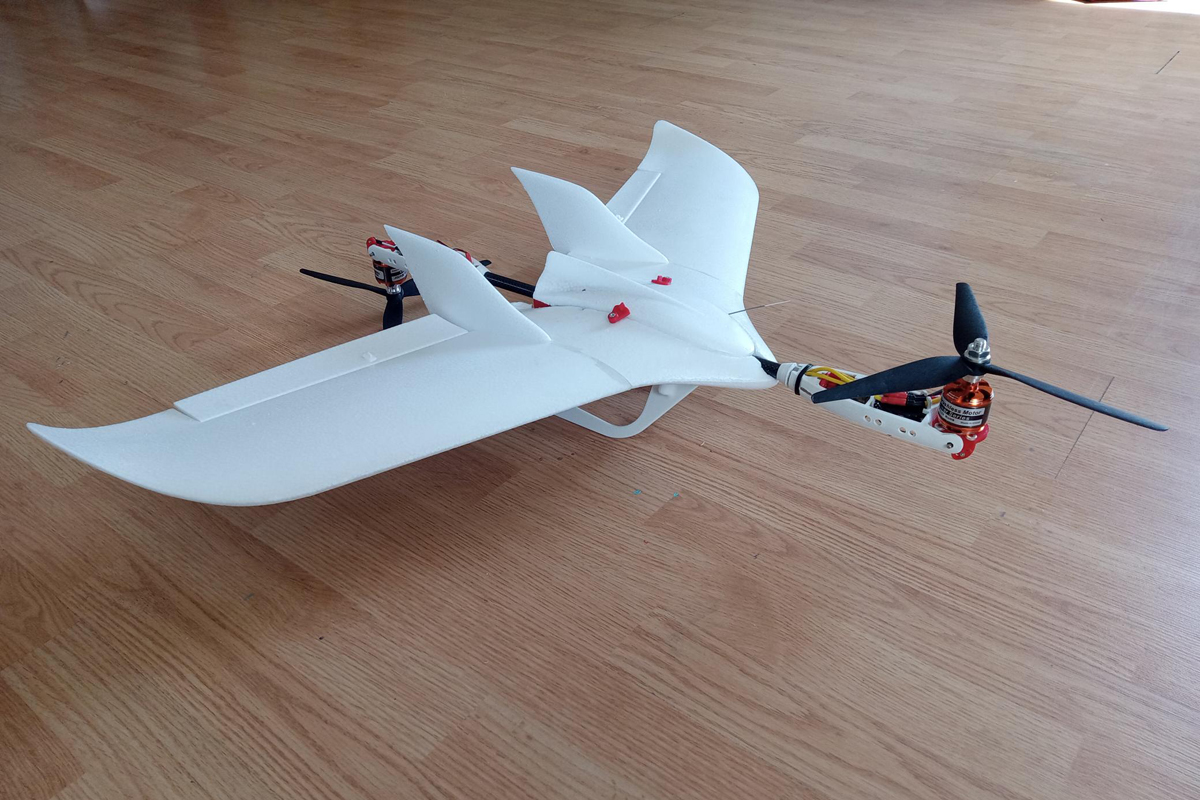
The aircraft has one main wing spanning 6.096 m (20 ft) and has two vertical stabilizers. The fuselage is made from carbon fiber composite to give the aircraft a high strength to low weight ratio. The aircraft has fixed skid streamlined landing gear. Gress also made a subscale model of the Odyssey, pictured below.
Specifications:
- Aircraft type: Passenger eVTOL multicopter (concept design)
- Piloting: 1 pilot, manual piloting with room for luggage
- Cruise speed (estimated): 362 km/h (225 mph)
- Maximum speed (estimated): 483 km/h (300 mph)
- Flight time: 45-60 minutes at a cruise speed of 362 km/h (225 mph)
- Hover time: 15 minutes for hovering
- Maximum payload weight: 91 kg (200 lb)
- Propellers: 2 counter-rotating tandem propellers which tilt in all directions
- Electric motors: 2 electric motors, 60 kW rate each
- Power source: Li-Ion batteries
- Fuselage: Carbon fiber composite
- Window: Canopy over the cockpit
- Wing: 1 main wing, with a 6.096 m (20 ft) wing span
- Tail: 2 vertical stabilizers
- Landing gear: Fixed skid streamlined landing gear (a production model could be designed with retractable skid landing gear)
- Safety features: Distributed Electric Propulsion (DEP) uses multiple propellers or electric ducted fans, each powered by electric motors, to increase safety through redundancy. If one or more components fail, the remaining ones can still ensure a safe landing. There are also redundancies of critical components in the sub-systems of the aircraft providing safety through redundancy. Having multiple redundant systems on any aircraft decreases having any single point of failure. Has shrouded propellers for additional safety.
Related Aircraft:
- Bivect Air Air Rider (concept design)
- Bivect Air Ariel (concept design)
- Bivect Air Nymbus (concept design)
- Bivect Air Rogue (concept design)
- Bivect Air Tandem-X (concept design)
- Bivect Air Twister (concept design)
Company Insights:
Resources:

Recent Pages
- CoolFly Urban 3 (prototype)
- CoolFly Urban 2 (concept design)
- CoolFly Urban (production model)
- CoolFly Dream ST (production model)
- CoolFly Dream Pro (production model)
- CoolFly Dream (prototype)
- Velo X Aerospace Velocitor X-C (concept design)
- Velo X Aerospace Velocitor X-1 (prototype)
- Velo X Aerospace Velocitor X-1 (pre-production prototype)
- SMD Shenzhen Smart Drone UAV Bullet Head (concept design)