Hien Aero Technologies HIEN Dr-One (concept design)
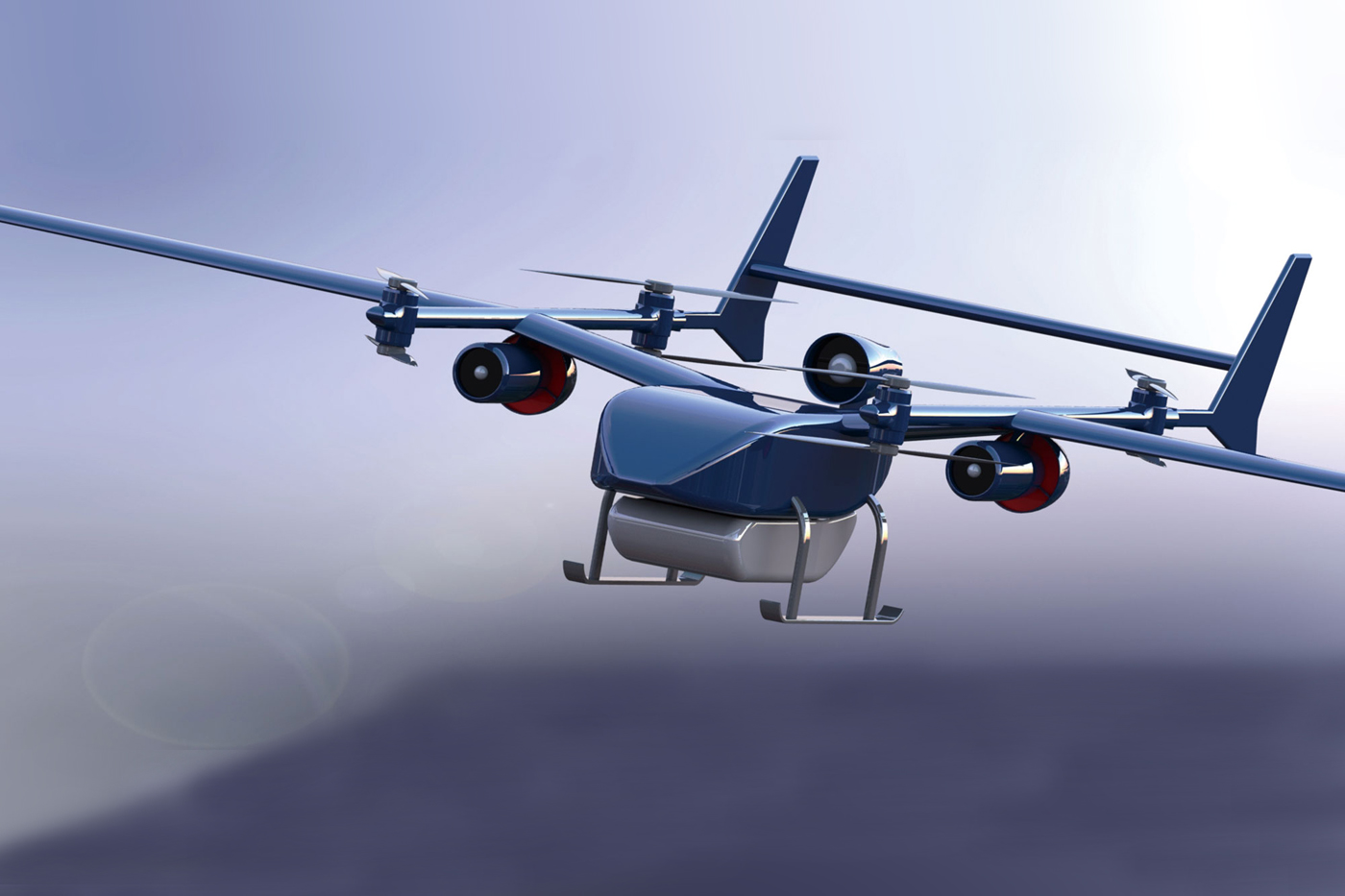
HIEN Dr-One (concept design)
HIEN Aero Technologies Co., LTD.
Koganei City, Tokyo, Japan
www.hien-aero.com
Founded in December 2021, Hien Aero Technologies is in the business of research, designing, manufacturing and sales of scalable passenger and cargo hybrid-electric vertical takeoff and landing (VTOL) aircraft for advanced air mobility (AAM). The company is based in Koganei, Tokyo, Japan. The company's main goals is safe and excellent aerodynamics, efficient and sustainable flight, quiet aircraft, long range capability and each model is scalable. (Image credit: HIEN Aero Technologies)
HIEN hybrid-electric VTOL aircraft features:
- Has a long range distance with the use of wings and with a hybrid-electric power source
- Has a high cruise speed
- Each aircraft is scalable to larger size aircraft
- Aircraft will be made for passengers or air cargo
- The aircraft are equipped with one or more 10 kW gas turbine hybrid-electric units, providing stable power generation performance
- The cargo aircraft can be used for Peer-to-Peer (P2P) high-speed air logistics
- The turbine engines can be used as an emergency power supply in a disaster area
HIEN Dr-One scalable air cargo hybrid-electric VTOL concept design aircraft
The HIEN Dr-One is a scalable air cargo hybrid-electric VTOL concept design aircraft. The aircraft is remotely piloted, autopilot or artificial intelligence (AI) piloting. The aircraft has been designed to accept a cargo pod and can pick up or drop off a cargo pod at a loading dock, cargo container facility, manufacturing facility, parking lot, loading dock, a grassy field or on the ground.
The anticipated maximum cruise speed is 180 km/h (112 mph), the expected range of the aircraft 150 km (93 m) and the predicted flight time is 60 minutes. The maximum payload weight of the aircraft for its size is calculated at 25 kg (55 lb). The aircraft is scalable to multiple larger sizes and can carry much heavier payload weights.
The aircraft has eight VTOL-only propellers, powered by eight electric motors and are mounted on two booms which are parallel to the fuselage. There are three turbine engines used for forward flight. Two turbine engines are mounted under the booms and one turbine engine is mounted on the top rear of the fuselage. The gas turbines use Jet-A1/B kerosene for fuel. The power supply capacity of 20 kWh. The aircraft has one high main gull-wing and the boom mounted tail has two vertical stabilizers and one horizontal stabilizer. The aircraft is made from carbon fiber composite material for a high strength and low weight ratio. The aircraft has fixed skid landing gear.
Prototype testing
The company started ground testing with its air cargo subscale prototype in 2023. The first successful hover tests of the Dr-One V1 proof-of-concept multicopter was in June 2023. It was announced on March 1, 2024, that the company's second air cargo subscale prototype, the Dr-One V2B made its first hover test outdoors.
HIEN Dr-One and its various air missions
The company foresees the HIEN Dr-One used for various air missions delivering goods in urban areas, remote islands, remote areas and rural areas. In addition, the turbine engines can also be used during natural disasters to provide emergency power in urgent situations.
Future outlook
The air cargo aircraft is expected to be for sale by 2025 and their passenger aircraft will be ready for sale by 2030.
Specifications:
- Aircraft type: Cargo hybrid-electric VTOL concept design aircraft
- Pilot: Remote, autopilot, autonomous piloting or artificial intelligence (AI) piloting
- Capacity: Cargo only
- Maximum cruise speed: ~180 km/h (112 mph)
- Range: ~150 km (93 m)
- Flight time: ~60 minutes
- Maximum payload weight: 25 kg (55 lb). The aircraft is scalable to multiple larger sizes.
- Propellers: 8 propellers for VTOL flight
- Electric motors: 8 electric motors
- Power source: 3 gas turbines using kerosene (Jet-A1/B)
- Power supply capacity: 20 kWh
- Fuselage: Carbon fiber composite
- Size: 500 X 320 X 90 cm (16 ft, 7/8 in X 9 ft, 7/8 in X 2 ft, 15/16 in)
- Wings: 1 main gull-wing
- Tail: 1 boom mounted tail
- Landing gear: Fixed skid landing gear
- Safety features: Distributed Electric Propulsion (DEP) means having multiple propellers (or electric ducted fans) and multiple electric motors on an aircraft so if one or more propellers (or electric ducted fans) or some electric motors fail, the other working propellers (or electric ducted fans) and electric motors can safely land the aircraft. DEP provides safety through redundancy for its passengers or cargo. There are also redundancies of critical components in the sub-systems of the aircraft providing safety through redundancy for its passengers or cargo. Having multiple redundant systems on any aircraft decreases having any single point of failure.
Related Aircraft:
- Hien Aero Technologies HIEN 2 (concept design)
- Hien Aero Technologies HIEN 6 (concept design)
- Hien Aero Technologies HIEN X (concept design)
Company Insights:
Resources:
- Hien Aero Technologies website
- Hien Aero Technologies Facebook
- Hien Aero Technologies Twitter
- Hien Aero Technologies YouTube Channel
- Hien Aero Technologies Instagram
- Article: Hien Aero Technologies Conducts Asia’s First Gas Turbine eVTOL Levitation Test, UAS Vision, Mar. 1, 2024
- Video: HIEN Dr-One V2 Hybrid VTOL, HIEN Aero Technologies, Mar. 1, 2024
- Article: Hybrid Flying Car Demonstration in West Japan; Oita Pref. Govt. Seeking Increased Regional Accessibility, The Japan News, Mar. 10, 2024
- Video: HIEN Dr-One V2 Hybrid VTOL, Hien Aero Technologies, Mar. 1, 2024

Recent Pages
- SMD Shenzhen Smart Drone UAV Bullet (production model)
- DreamFly Aerotech DF3000 Youlong (prototype)
- aeroG Aviation AG-8 (concept design)
- NASA Tiltwing-Two (illustration)
- CoolFly Urban 4 (concept design)
- CoolFly Standing Flight Platform (prototype)
- CoolFly Urban 3 (prototype)
- CoolFly Urban 2 (concept design)
- CoolFly Urban (production model)
- CoolFly Dream ST (production model)