Pegasus Universal Aerospace Vertical Business Jet (concept design)
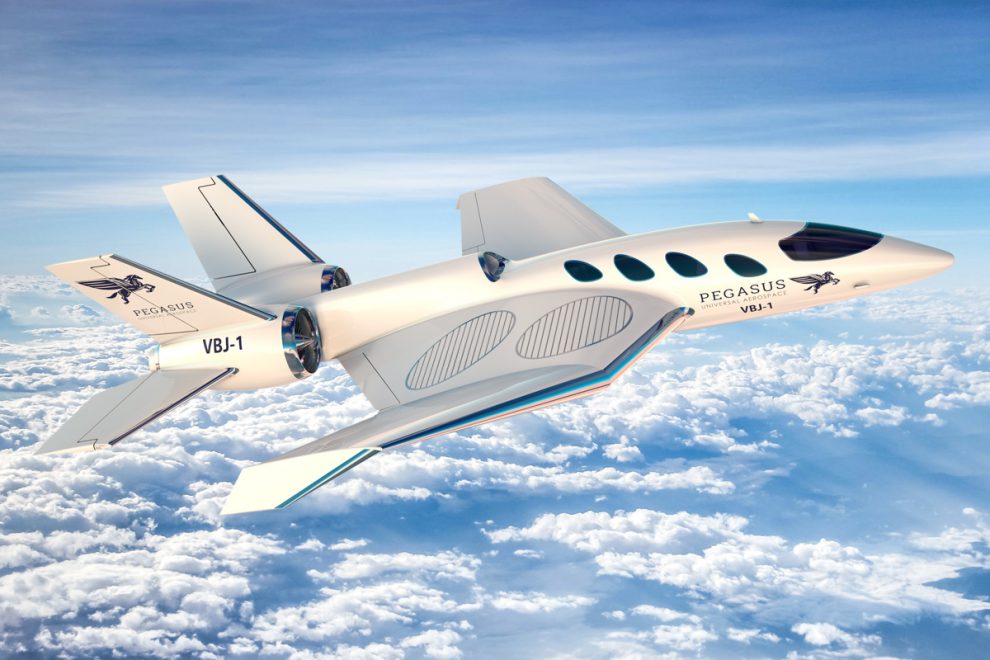
(Image credit: Pegasus Universal Aerospace)
Vertical Business Jet VBJ (concept design)
Pegasus Universal Aerospace
Houghton Estate, Johannesburg, South Africa
www.pegasusua.com
Pegasus Universal Aerospace was founded in 2011 in Houghton, Johannesburg, South Africa by Dr. Reza Mia. The company is in the business of designing and manufacturing passenger electric vertical takeoff and landing (eVTOL) and hybrid-electric VTOL aircraft for advanced air mobility (AAM). The first project of the company is to manufacture a small passenger hybrid-electric VTOL jet. The conceptual design work for the Vertical Business Jet began in 2013. The company also announced two new but smaller passenger eVTOL multicopter concept design aircraft in 2024 and in 2025. Pegasus Universal Aerospace is primarily self-funded with an angel investor and is currently looking for new investments. Pegasus estimates as of July 2019, it needs $400 million to bring the aircraft to the market.
The company's mission is to innovate the aerospace and transportation sector, both locally and globally, provide their client's with service and value that exceeds their expectations in terms of safety, comfort, style, speed and the ability to fly from point-to-point in a jet without the aid of runways. The jet will be able to land in a parking lot, heliport, yacht, on any surface including grass or gravel, and on a conventional runway. This capability of VTOL flight eliminates the need for a car or helicopter to travel to and from an airport, reducing travel time for the passengers. Pegasus Universal Aerospace plans to compete with tradition private jets used for short to medium trips in the nascent advanced air mobility (AAM) industry.
Vertical Business Jet passenger hybrid-electric VTOL concept design jet
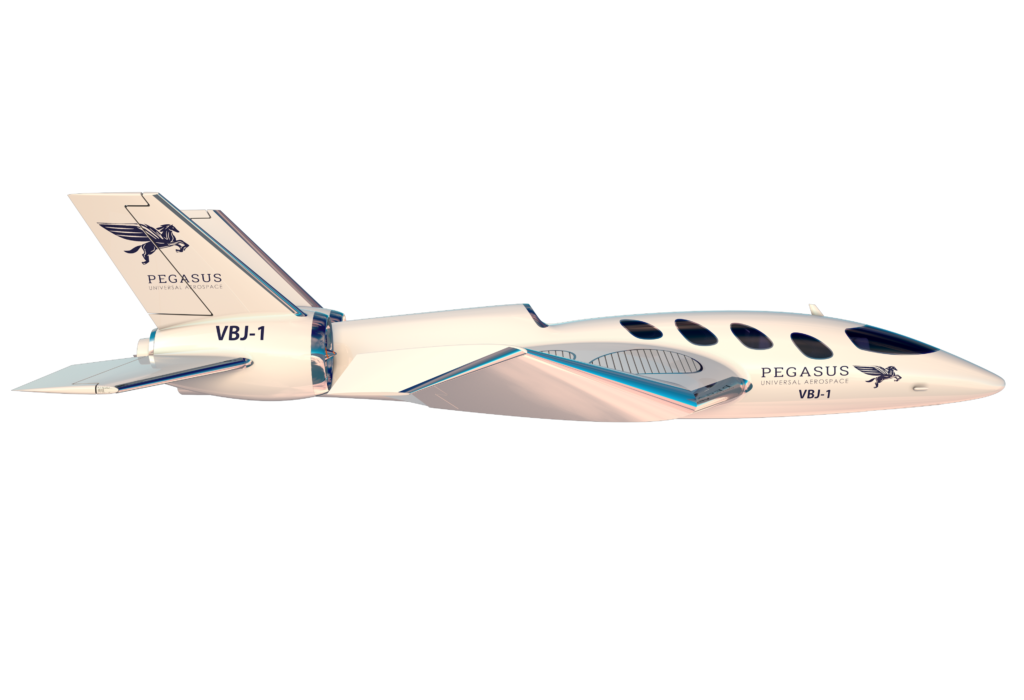
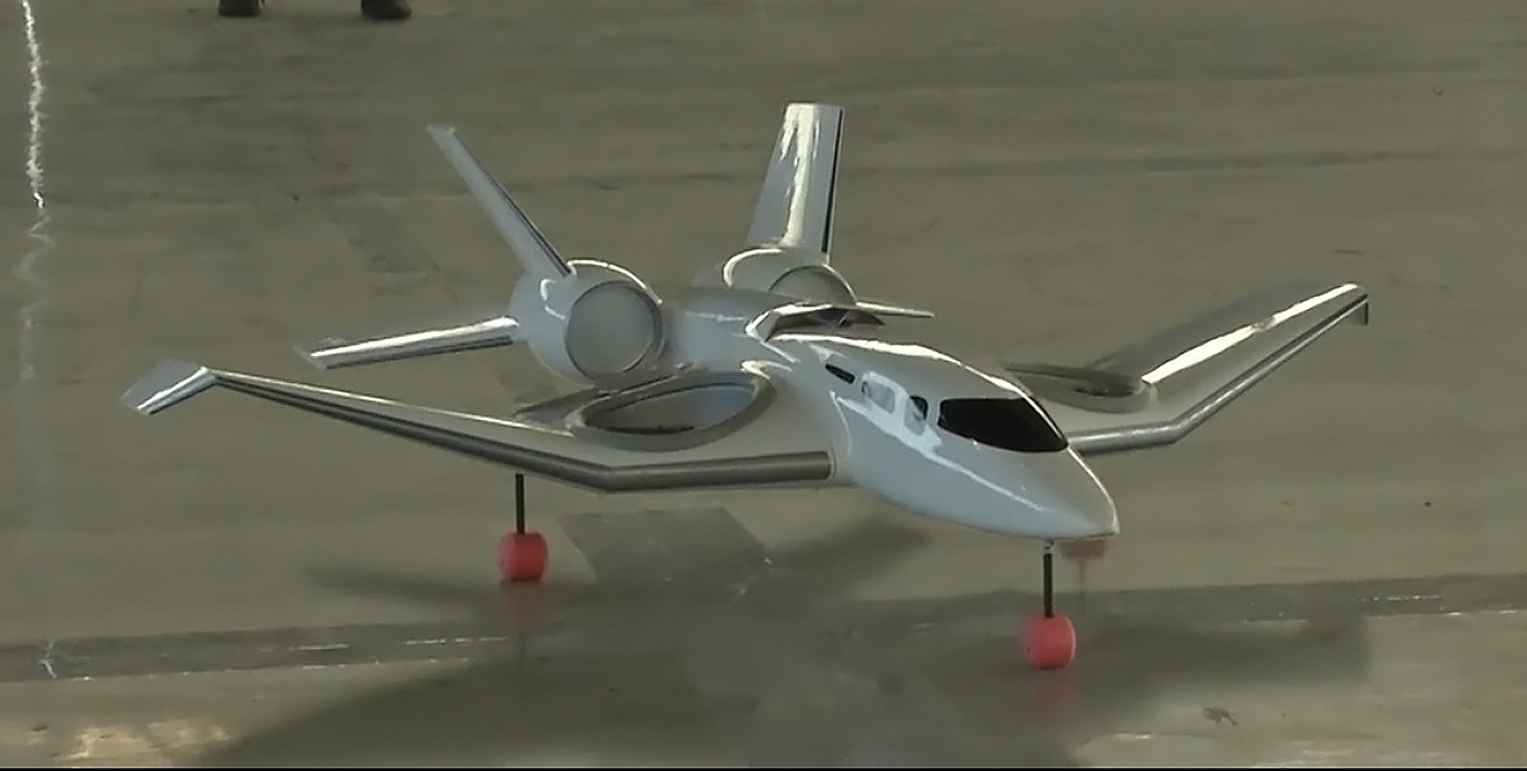
The Vertical Business Jet is a passenger hybrid-electric VTOL concept design jet aircraft that holds one pilot and six passengers. The jet can takeoff and land using its VTOL propellers or can takeoff and land conventionally. When using its VTOL mode during operations, the range is less but the convenience of not having to use prepared runways make the jet invaluable for the convenience of not having to travel back and forth to airports.
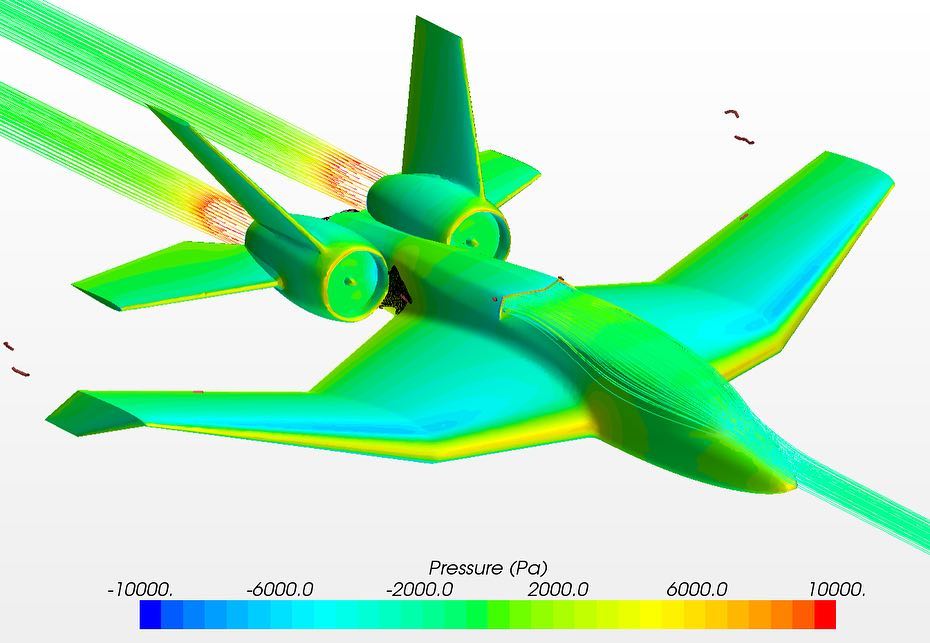
The aircraft's expected cruise speed is 759 km/h (472 mph) and has a projected maximum speed of 796 km/h (495 mph). The jet's calculated maximum altitude is 10,668 m (35,000 ft). In VTOL mode, the aircraft has an estimated range 2,124 km (1,320 miles) with a flight time of approximately three hours. When using conventional runways, the jet has a predicted range of 4,400 km (2,743 miles) and has a forecasted flight time of six and a half hours. The aircraft has one main wing with winglets, has eight propellers VTOL that are enclosed with top and bottom louvers during forward flight, and has two turbine engines for forward flight. There are two counter rotating propellers in each of the four VTOL openings in the main wings. The aircraft has a modified V-tail with two horizontal stabilizers. The aircraft has retractable tricycle wheeled landing gear.
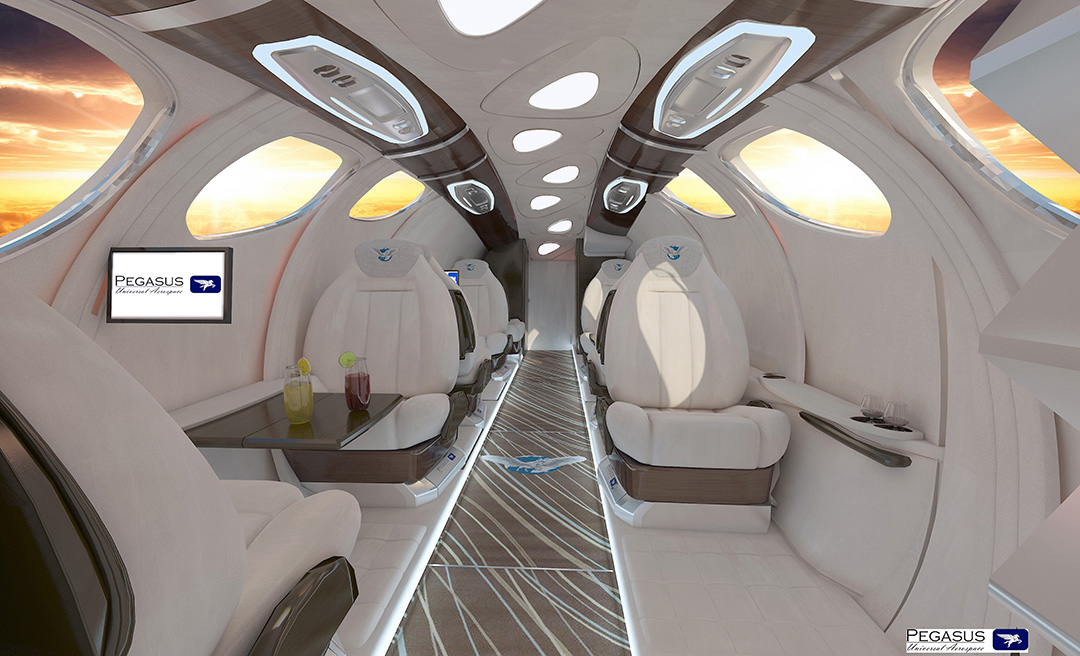
The jet burns 309 liters (81.63 gallons) per hour amounting to a 60% savings of fuel compared to a standard jet. The jet will also have multiple innovations making the jet safe and easy to fly. The VTOL portion of the flight is foreseen to be much quieter than a helicopter due to the propellers-in-wing using electric motors for vertical take-off and landing. The business jet will have an all composite airframe with a cross section having a wider and higher space than other private jets of the same size, allowing passengers to move around easier. The flight experience will include expanded amenities relative to other business jet experiences, including high speed internet.
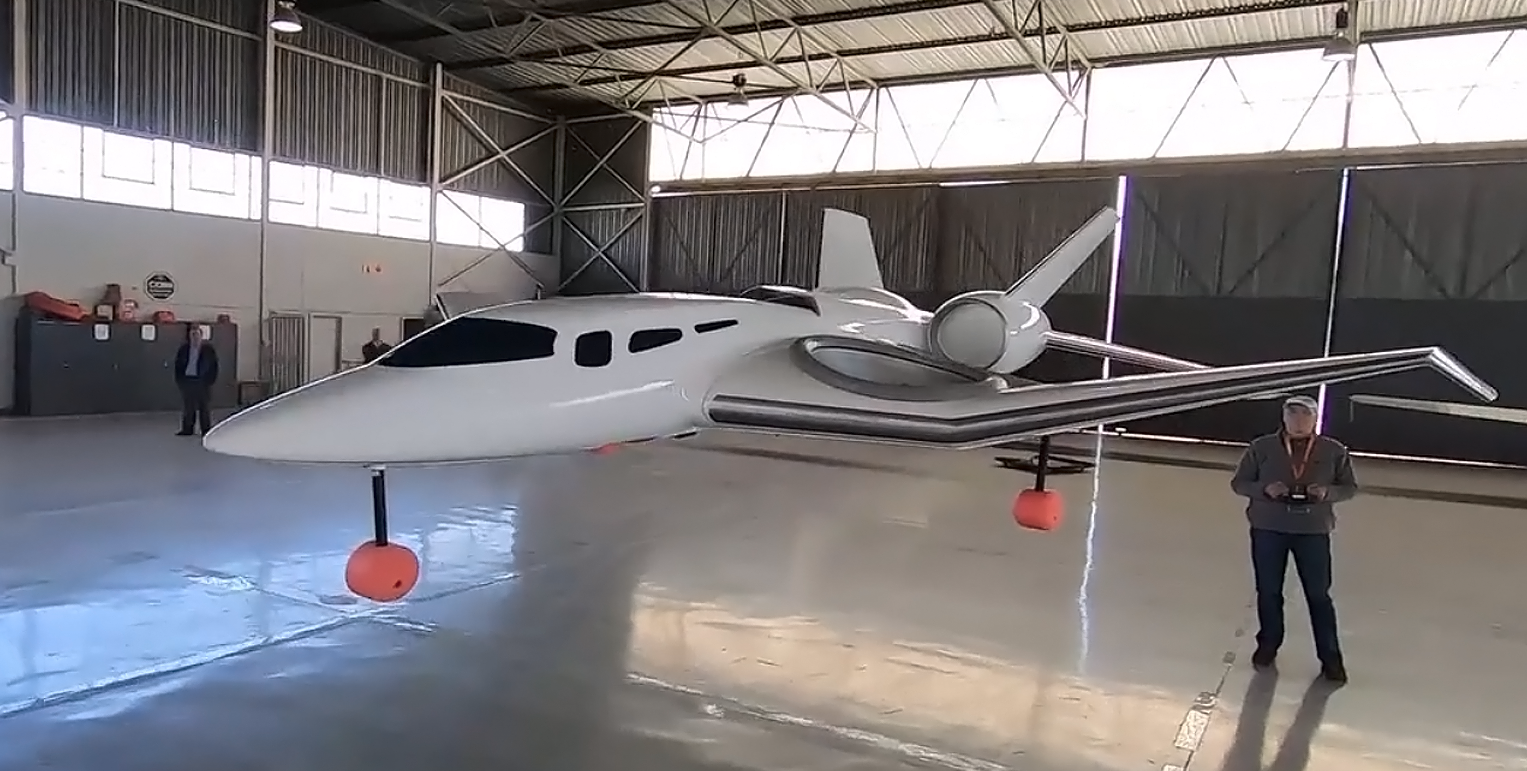
A one-eighth 1/8 sub-scale prototype has already undergone flight testing to validate the jet’s abilities to take off vertically and transition to horizontal flight. Nasrin Ebrahim, Chief Operations Officer of ;Pegasus Universal Aerospace, made a video of this test available on her LinkedIn page. The video may also be viewed on the company's website. A full-scale prototype is planning to be made in 2019 with flight testing sometime in 2020. (As of January 2024, it is unknown if the company has completed the planned full-scale prototype.) Pegasus Universal Aerospace has already had patents granted with more patents pending. These include patents granted in the United States, the primary target of future sales for the Vertical Business Jet.
The marketing of the Vertical Business Jet includes business use, offshore transportation, resource development, charter, business executives, VIP’s, celebrities, owner-flyer, heads of state, politicians, anti-poaching, medical evacuation, surveillance, police and government use.
Pegasus Universal Aerospace plans to compete with tradition jets used for short to medium trips and as of November 2020 their goal is receive certification and enter into service between 2025 and 2027.
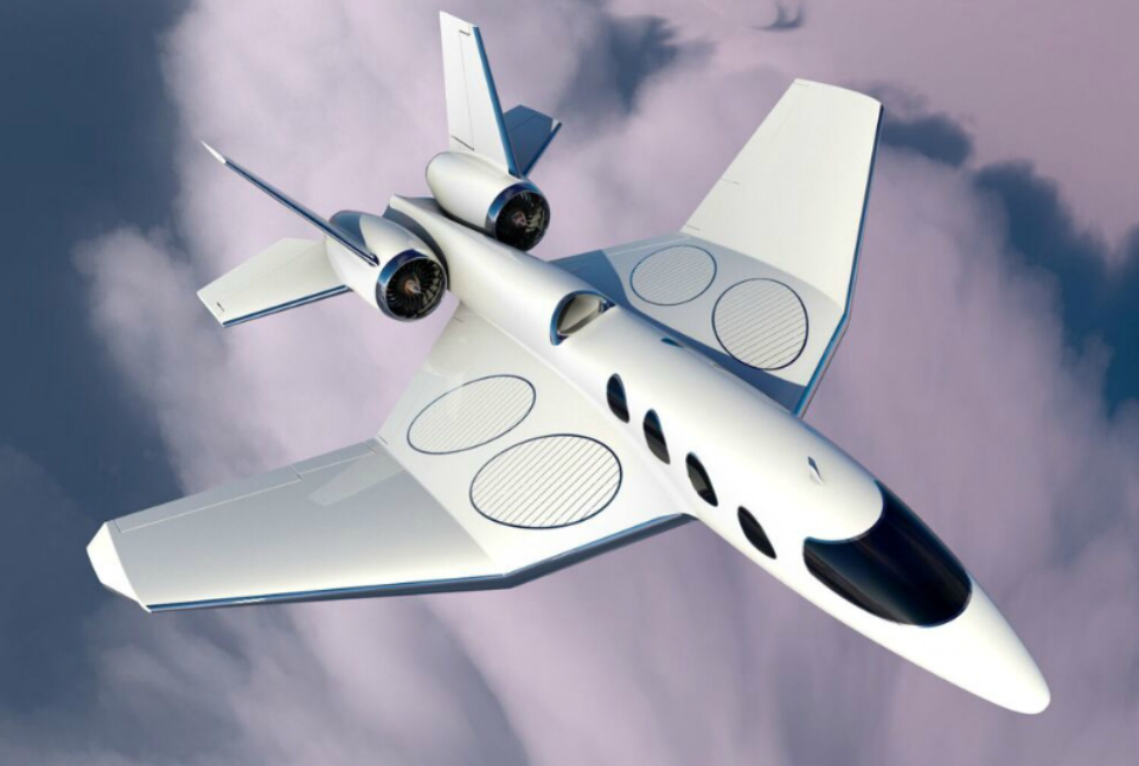
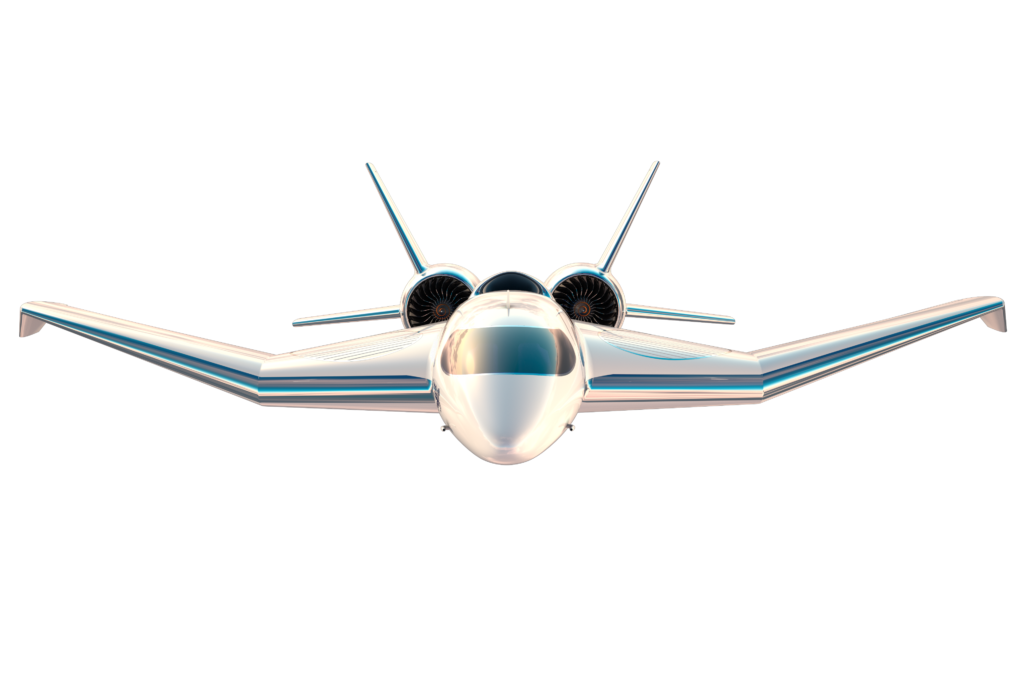
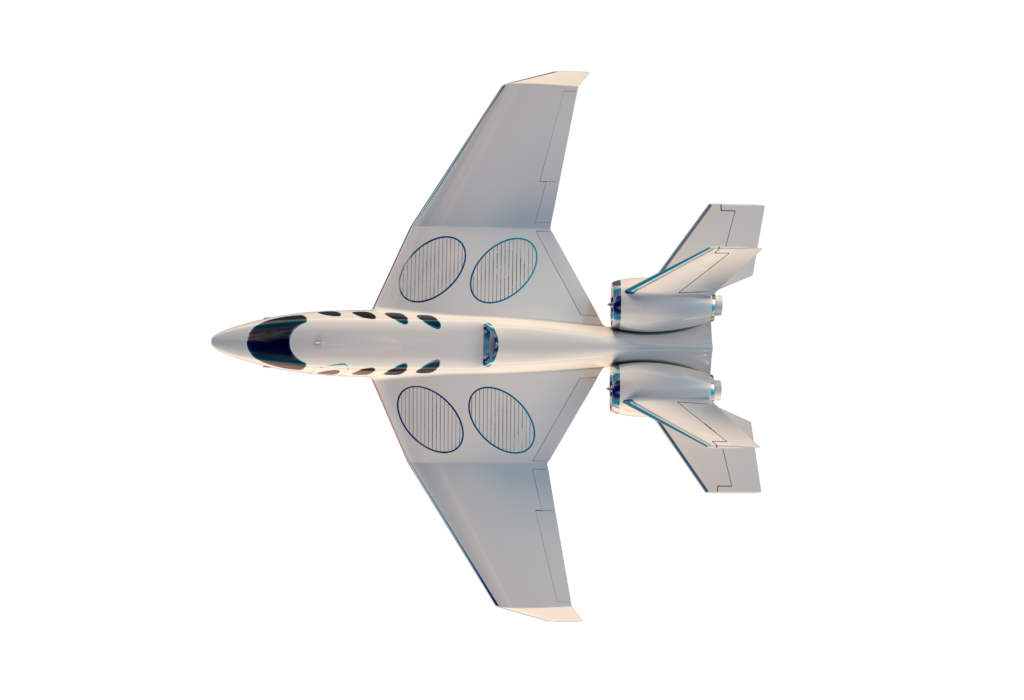

Specifications:
- Aircraft type: Passenger hybrid-electric VTOL jet aircraft
- Passengers: 1 pilot, 6 passengers
- Cruise speed: 759 km/h (472 mph)
- Maximum speed: 796 km/h (495 mph)
- Range using VTOL capability: 2,124 km (1,320 m)
- Range using conventional runways: 4,400 km (2,743 m)
- Maximum flight time VTOL mode: Approximately 3 hours
- Maximum flight time conventional takeoff: Approximately 6-1/2 hours
- Maximum altitude: 10,668 m (35,000 ft)
- Empty weight: 3,040 kg (6,702 lb)
- Maximum payload weight: 2,660 kg (5,864 lb)
- Maximum takeoff weight: 5,700 kg (12,566 lb)
- Propellers for VTOL flight: 8 electric propellers-in-wing with , two propellers are pair of fans are counter rotating, with bottom and top louvers that close during forward flight
- Engines for forward flight: 2 GE Aviation CT7-8 turboshaft engines, 2,300 shp
- Engines Managed by multiple redundant computer systems
- Main Wings: Cranked dihedral wings with winglets
- Tail: V-tail and two horizontal stabilizers
- Landing Gear: Retractable tricycle wheeled landing gear
- Safety features: Distributed Electric Propulsion (DEP) means having multiple propellers (or electric ducted fans) and multiple electric motors on an aircraft so if one or more propellers (or electric ducted fans) or some electric motors fail, the other working propellers (or electric ducted fans) and electric motors can safely land the aircraft. DEP provides safety through redundancy for its passengers or cargo. There are also redundancies of critical components in the sub-systems of the aircraft providing safety through redundancy for its passengers or cargo. Having multiple redundant systems on any aircraft decreases having any single point of failure.
Related Aircraft:
- Pegasus Universal Aerospace Chariot (concept design)
- Pegasus Universal Aerospace Two-Man eVTOL (concept design)
Company Insights:
Resources:
- Pegasus Universal Aerospace website
- Pegasus Universal Aerospace Facebook
- Pegasus Universal Aerospace Twitter
- Pegasus Universal Aerospace Instagram
- Pegasus One Vertical Business Jet VBJ patent
- Video: Pegasus Rotation, Pegasus Universal Aerospace, Aug. 2, 2018.
- Article: Pegasus prepares VTOL business jet for first outing, Flight Global, May 7, 2019
- Article: Pegasus Universal Unveils VTOL BizJet, Flying Magazine, May 23, 2019
- Article: Upward Mobility, Prestige Magazine, July 22, 2019
- Article: VTOL Startup Pegasus Brings Irons on Board as CEO, Aviation International News Online, July 25, 2019
- Article: Speed and Luxury, Good Style Magazine, July 29, 2019
- Article: Wiltshire-based tech company features in The Lost City, Salisbury Journal, May 4, 2022
- Video: Flight of the 1/8th Scale Pegasus One Vertical Business Jet Prototype, Pegasus Universal Aerospace, Aug. 21, 2020
- Article: This Futuristic Aircraft Can Fly Like a Business Jet and Take Off Like a VTOL, Robb Report, Nov. 17, 2020
- Article: Pegasus Aerospace is Developing a New Business Jet with Vertical Takeoff Capability in South Africa, Aviation Today, Nov. 23, 2022
- Article: Pegasus advances its VBJ project, Business Air News, June 27, 2023
- Article: Pegasus Universal Aerospace breaks new ground in vertical business jet development, IOL, Oct. 30, 2023

Recent Pages
- SMD Shenzhen Smart Drone UAV Bullet (production model)
- DreamFly Aerotech DF3000 Youlong (prototype)
- aeroG Aviation AG-8 (concept design)
- NASA Tiltwing-Two (illustration)
- CoolFly Urban 4 (concept design)
- CoolFly Standing Flight Platform (prototype)
- CoolFly Urban 3 (prototype)
- CoolFly Urban 2 (concept design)
- CoolFly Urban (production model)
- CoolFly Dream ST (production model)