Peravia AirBend
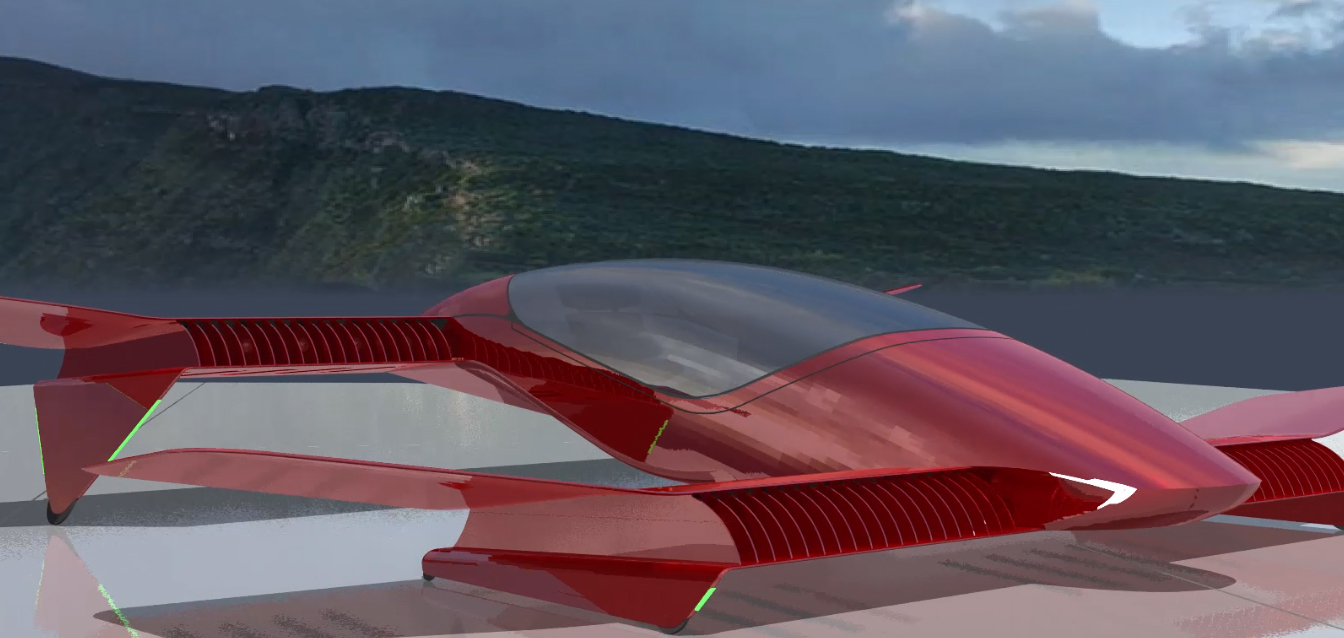
Peravia AirBend
Peravia Personal Aviation
Czestochowa, Silesian, Poland
www.peravia.pl
Founded on Nov. 19, 2018, Peravia (PERsonal AVIAtion) is an electric vertical takeoff and landing (eVTOL) Urban Air Mobility (UAM), cargo eVTOL and electric drone manufacturer, based in Poland. The key goal is to produce and sell simple and affordable eVTOL UAM aircraft to individuals, so that people can fly with independence from any type of infrastructure.
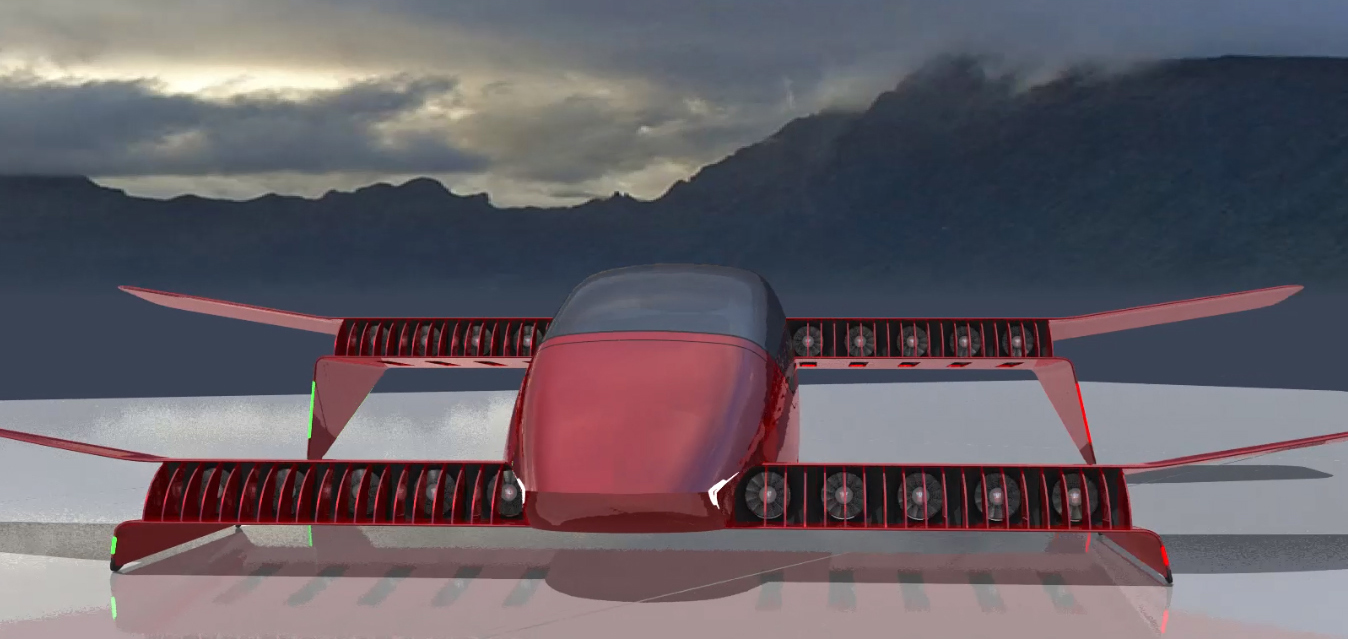
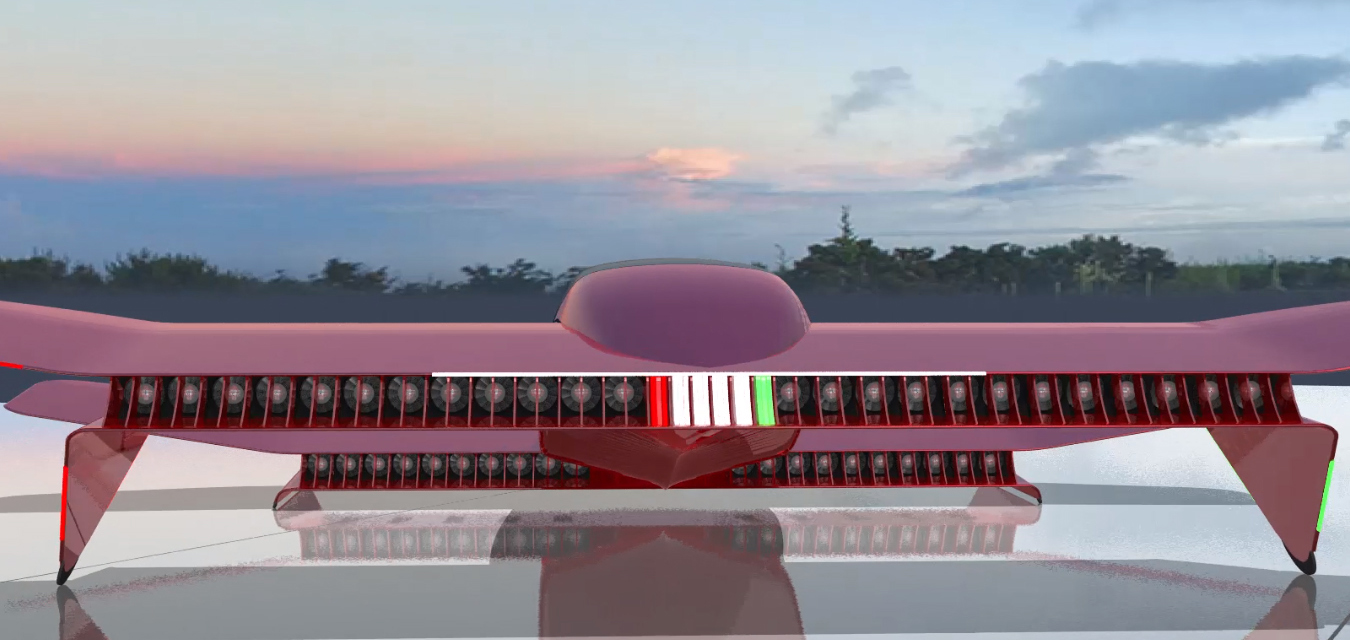
The company's number one priority for their aircraft is safety. The basis for their safety is distributed electric propulsion (DEP) and the use of batteries to power their aircraft. Their eVTOL aircraft, called the "Personal Aircraft" has 32 ducted fans and 32 electric motors, powered by batteries. Having these multiple ducted electric fans provide a high level of safety because if three, four or more ducted electric fans or electric motors fail, the aircraft will still be able to fly and land safely.
Simplicity is the key for the company's aircraft design. Their aircraft is without tilt rotors, tilt wings, dangerous propellers, complex joints or any moving parts. The way the aircraft is made is an extremely efficient design due to battery to electric motor direct power, very few moving parts, an aircraft that is light in weight, and it uses a computer to control and fly the aircraft safely. If several electric motors or electric ducted fans stop working, the aircraft will easily be able to land the aircraft safely for repairs.
Batteries powering an electric aircraft also provide another enormous safety factor over gasoline or turbine powered aircraft. Petroleum powered engines not only have many moving parts which can fail and cause a catastrophe but the liquid fuel can catch fire if the right conditions are present. With batteries, there are no moving parts to fail and batteries typically do not catch fire. Battery powered aircraft also have another advantage in efficiency. Power from the battery goes directly to the electric motors and a NASA study shows that electric motors are two to fours times as efficient than gasoline or turbine engine and electric aircraft can have between five to 10 times lower energy costs than petroleum powered aircraft.
The aircraft is a one passenger sleek modern design with a lower front and sloping upwards rear design sporting canard wings. The front wings are flush with the bottom of the aircraft and the rear wing is also flush with the bottom of the fuselage however, they are higher due to the design of the sloping upward design of the aircraft and the rear wings are longer in width than the front wings.
The landing gear again, introduces simplicity with very little moving parts. At the end of each wing, is a sloping downward wing structure, at a slight angle from the vertical, with wheels at the bottom allowing for the aircraft to roll when needed.
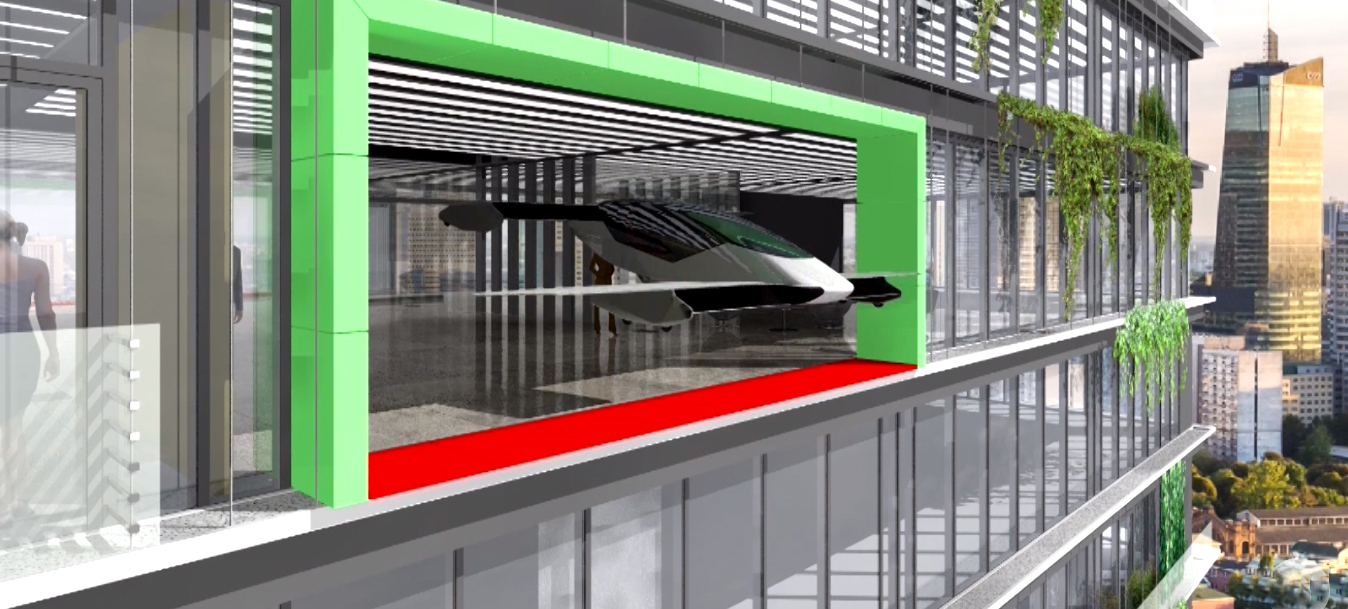
Peravia Personal Aviation's proposal is to not add any additional infrastructure to any city or residential area. They propose that the high rises where people work add flight decks on multiple levels of tall buildings and allow the aircraft to land and be stored inside the building during working hours. This will increase the efficiency of travel for the passenger and reduce the need to costly new structures for landing pads throughout a city.
The company foresees that anyone can purchase their AirBend eVTOL aircraft and fly it whenever and wherever you want. Simplicity will make traveling even less expensive than by car. By passengers taking off from the side of one building and landing in another, the entire trip will take a fraction of the time it does to travel by bicycle, car or mass transit. The company would like to sell their passenger eVTOL aircraft directly to the consumer and change the face of travel, forever. In addition to the Airbend, Peravia is also developing the UnitJoy.
Specifications:
- Aircraft type: Autonomous eVTOL personal aircraft
- Capacity: 1 passenger
- Cruising speed: 300 km/h (186 mph)
- Range: 300 km (62 miles)
- Flight time: 60 minutes
- Maximum payload: 150 kg (331 lbs)
- Empty weight: Unknown
- Cruising altitude: 30-4,572 meters (100-15,000 feet)
- Electric ducted fans: 32
- Electric Motors: 32 electric motors
- Power source: Batteries
- Windows: A panoramic window provides spectacular views
- Wings: Canard wings
- Wing span: 4 meters (13 feet)
- Length: 4 meters (13 feet)
- Landing gear: Wheeled stationary landing gear. The wheels are connected to fixed struts, on a tapered strut which is almost in the vertical position. The strut extends from the wings with a total of six wheels for the entire aircraft. There are two wheels under the tail of the aircraft and and four wheels under the front wing.
- Safety Features: Distributed Electric Propulsion (DEP), provides safety through redundancy for its passengers and/or cargo. DEP means having multiple propellers and motors on the aircraft so if one or more motors or propellers fail, the other working motors and propellers can safely land the aircraft. The aircraft can also land like an airplane, adding another level of safety to their aircraft.
Resources:
- Peravia Personal Aviation website

Recent Pages
- SMD Shenzhen Smart Drone UAV Bullet (production model)
- DreamFly Aerotech DF3000 Youlong (prototype)
- aeroG Aviation AG-8 (concept design)
- NASA Tiltwing-Two (illustration)
- CoolFly Urban 4 (concept design)
- CoolFly Standing Flight Platform (prototype)
- CoolFly Urban 3 (prototype)
- CoolFly Urban 2 (concept design)
- CoolFly Urban (production model)
- CoolFly Dream ST (production model)