aeroG Aviation AG-8 (concept design)
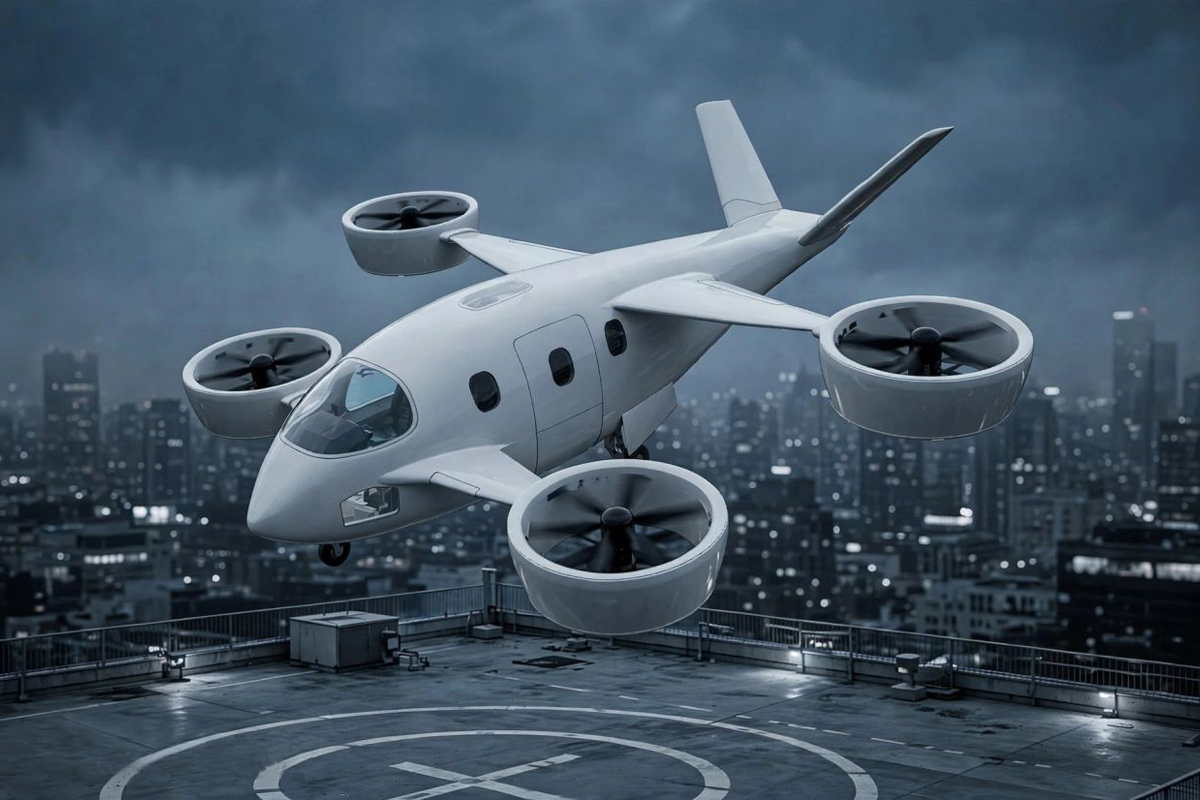
(Image credit: aeroG Aviation)
AG-8 (concept design)
aeroG Aviation LLC
Woodland Park, New Jersey, USA
www.aerogaviation.com
Founded in August 2016 by Robert Gomez, aeroG Aviation LLC designs and develops passenger and air-cargo electric vertical takeoff and landing (eVTOL) aircraft for advanced air mobility. Based in Palm Bay, Florida, the company is currently focused on the AG-8 powered-lift eVTOL, in the engineering specification phase under FAA AC 21.17-4 (Type Certification — Powered-Lift). aeroG Aviation is seeking strategic partners and is open to acquisition discussions.
Before the company was founded, the team's first simulation project was the UV-4 UAV, an uncrewed air cargo eVTOL aircraft developed at Bergen Community College in 2015 by the company founder. The project was funded by the college’s STEM (Science, Technology, Engineering, and Mathematics) grant. The project was first released on Microsoft Flight Simulation X and Lockheed Martin Prepar3D v3 in January 2017. The research developed by this group formed the basis for aeroG Aviation LLC.
aeroG Aviation develops its aircraft through simulation science and theoretical proofs before committing to physical build. The company holds a signed MOU with the Advanced Air Mobility Institute supporting certification roadmap alignment and outreach, and is bringing the AG-8 to Microsoft Flight Simulator 2024 with Wolfhound Studios.
AG-8 high-speed long-range passenger eVTOL aircraft (concept design)
The AG-8 is a high-speed long-range piloted passenger eVTOL concept design aircraft. The aircraft holds two pilots, four passengers and their luggage. The aircraft has a cockpit door, cabin side door, rear loading ramp and an emergency hatch on the roof. On October 1, 2026, the company announced they are now in the certification-aware engineering specification phase being developed under FAA AC 21.17-4 (Type Certification—Powered-Lift) for their new flagship AG-8 passenger eVTOL aircraft.
The cruise speed of the aircraft is estimated to be 288 mph (464 km/h), has an expected range of 100 m (161 km) and has a calculated maximum payload weight of 12,500 lb (5,700 kg). The aircraft has four variable-pitched electric ducted fans (EDFs) each holding two propellers for a total of eight propellers for the entire aircraft. The EDFs are located at the ends of aircraft's canard wings. The propellers are driven by eight electric motors and the entire aircraft is powered by battery packs. The aircraft has one V-tail. The fuselage is made from carbon fiber composite to give the aircraft a high strength to low weight ratio. The aircraft has retractable tricycle wheeled landing gear.
Mission capability
The AG-8 is designed for passenger operations in any configuration such as on-demand air taxi, scheduled regional travel,
corporate travel and personal travel. It is also capable of civil missions such as federal or state law enforcement, government service, and emergency medical services, depending on the final customer and configuration.
Specifications:
- Aircraft type: High-speed long-range passenger eVTOL aircraft (concept design)
- Piloting: 2 pilots
- Capacity: 4 passengers and their luggage
- Cruise speed: 288 mph (464 km/h)
- Range: 100 m (161 km)
- Maximum payload weight: 12,500 lb (5,700 kg)
- Propellers: 4 variable-angle EDFs (electric ducted fans) with 8 coaxial propellers
- Electric motors: 8 electric motors
- Power source: Battery packs
- Fuselage: Carbon fiber composite
- Overall length: 41 ft, 9 in (12.73 m)
- Fuselage length: 39 ft, 0 in (11.90 m)
- Span across rear ducts (outer faces): 43 ft, 0 in (13.10 m)
- Span across front ducts (outer faces): 33 ft, 11 in (10.34 m)
- Windows: The windows are similar to general aviation airplanes and small private and corporate jets
- Wings: 1 canard wing (1 front short wing, 1 high main wing)
- Tail: 1 V-tail
- Landing gear: Retractable tricycle wheeled landing gear
- Safety features: Distributed Electric Propulsion (DEP) uses multiple propellers or electric ducted fans, each powered by electric motors, to increase safety through redundancy. If one or more components fail, the remaining ones can still ensure a safe landing. There are also redundancies of critical components in the sub-systems of the aircraft providing safety through redundancy. Having multiple redundant systems on any aircraft decreases having any single point of failure. There is also a whole aircraft emergency ballistic parachute in case of an unexpected inflight emergency.
Company Insights:
Resources:
- aeroG Aviation website
- aeroG Aviation Facebook
- aeroG Aviation YouTube
- aeroG Aviation Instagram
- Case study: UV-4 V/STOL UAV, Prepared3D, 2016
- Article: Students Sold on STEM Study, The Paramus Post, Apr. 27, 2016
- Article: Drones Research Taking Off At Paramus College, Daily Voice, May 26, 2016
- Article: Bergen Community College students to show off drone concept, North Jersey, Oct. 20, 2016
- Video: AeroG & Thranda UV-4 V/STOL UAV for X-plane 11 & 10, Thomas Rasmussen, Jan. 18, 2017
- Article: Aircraft Review : AeroG UV-4 UAV by Thranda, X-Plane Reviews, Jan. 23, 2017
- Article: AeroG UV-4 V/STOL UAV Aircraft Released For FSX & P3D, Fly Away Simulation, Mar. 14, 2017
- Podcast: Joseph Mattern aeroG Aviation - Electric Aircraft Designs, Electric Vehicle Podcast, Jan. 17, 2020

Recent Pages
- aeroG Aviation AG-8 (concept design)
- NASA Skylark (concept design)
- CoolFly Urban 4 (concept design)
- CoolFly Standing Flight Platform (prototype)
- CoolFly Urban 3 (prototype)
- CoolFly Urban 2 (concept design)
- CoolFly Urban (production model)
- CoolFly Dream ST (production model)
- CoolFly Dream Pro (production model)
- CoolFly Dream (prototype)