Skyfly Technologies Axe (production prototype)
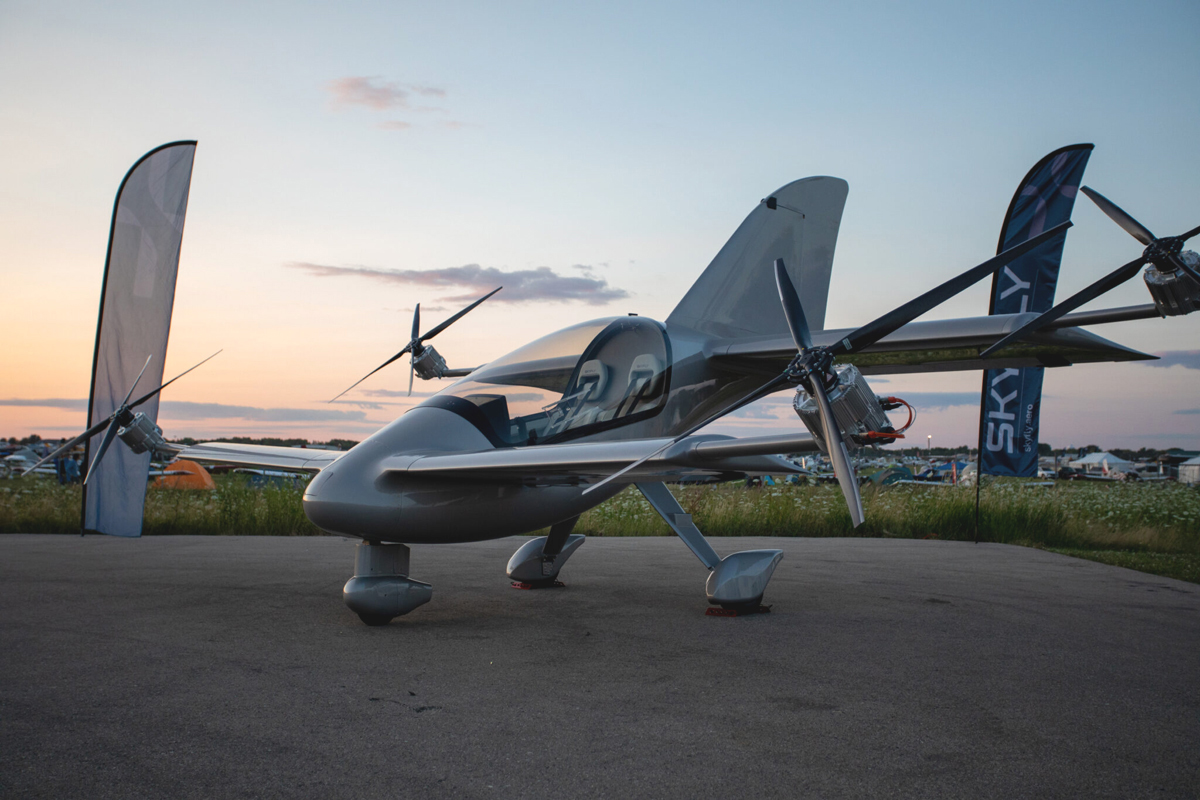
(Photo credit: Skyfly Technologies)
Axe (production prototype)
Skyfly Technologies Ltd
Thorpe Mandeville, East Midlands, England, United Kingdom
www.skyfly.aero
Founded in 2019, Skfly Technologies Ltd designs, manufacturers and sells electric vertical take-off and landing aircraft (eVTOL) passenger and hybrid-electric VTOL passenger aircraft. Skyfly Technologies' CEO is Michael Thompson and the company is based in Thorpe Mandeville, East Midlands, England, United Kingdom. The company foresees selling its initial aircraft for personal air transportation and in the future, expects their air cargo aircraft to be used by government and defense use. The company has made and flown subscale prototypes, validating the technical aspects of their aircraft design.
In October 2026, Skyfly Technologies closed a $10 million seed round led by HICO Investment Group with Archangel to take the Axe aircraft from a flying prototype to certified production aircraft. The funding completes the Federal Aviation Administration's (FAA) light-sport aircraft certification of the Axe under the new FAA Modernization of Special Airworthiness Certification (MOSAIC) rules ahead of first customer deliveries expected in 2027. This certification will also accelerate the certification of the hybrid-propulsion system for the autonomous air cargo Longbow aircraft which the company plans to sell to government and defense customers.
Axe passenger eVTOL aircraft (production prototype)
The Axe is a two passenger eVTOL production prototype aircraft. The aircraft holds one pilot, one passenger and their luggage. The aircraft can be flown by anyone with a standard pilot's license who has appropriate training for their eVTOL aircraft. The company states flying the aircraft is easy and intuitive, and has automatic stabilization in hover mode.
The cruise speed of the aircraft is 161 km/h (100 mph) and has a range of 185 km (115 m). The aircraft has four fixed-pitched propellers, eight electric motors and is powered by high-capacity 70 kWh lithium-ion batteries. The batteries are housed in the fuselage and are easily swapped out for fully charged batteries. The empty weight of the aircraft is 550 kg (1,213 lb), has a maximum payload weight of 200 kg (441 lb) and has a maximum takeoff weight of 750 kg (1650 lb).
The aircraft has a canopy over the cockpit, has tandem wings, one conventional tail and the fuselage is made from carbon fiber composite to give the aircraft a high strength to low weight ratio. The aircraft has fixed tricycle wheeled landing gear. There is also a whole aircraft emergency ballistic parachute in case of an unexpected inflight emergency.
Mission capability
The company predicts the aircraft will be used for personal air travel. The company states their aircraft will provide customers with access to destinations that most other aircraft can't reach such as small fields, private land, driveways, lawns, parking lots and heli-pads.
Production Update
On September 23, 2026, the company stated on Facebook they are moving towards series production and their composites team has been refining the processes for their carbon fiber components. The aircraft will be made in the company's manufacturing and assembly facility in the United Kingdom with first deliveries planned for 2027.
Specifications:
- Aircraft type: Passenger eVTOL aircraft (production prototype)
- Piloting: 1 pilot
- Capacity: 1 pilot, 1 passenger with their luggage
- Cruise speed: 161 km/h (100 mph)
- Range: 185 km (115 m)
- Empty weight: 550 kg (1,213 lb)
- Maximum payload weight: 200 kg (441 lb)
- Maximum takeoff weight: 750 kg (1650 lb)
- Propellers: 4 fixed-pitched propellers
- Electric motors: 8 electric motors
- Power source: High-capacity lithium-ion batteries 70 kWh. Hover power required 200 kW. 280 kW peak. The batteries are housed in the fuselage and are easily swapped out for fully charged batteries.
- Fuselage: Carbon fiber composite
- Window: Canopy over cockpit
- Wings: Tandem wings
- Tail: 1 conventional tail
- Landing gear: Fixed tricycle wheeled landing gear
- Safety features: Distributed Electric Propulsion (DEP) uses multiple propellers or electric ducted fans, each powered by electric motors, to increase safety through redundancy. If one or more components fail, the remaining ones can still ensure a safe landing. There are also redundancies of critical components in the sub-systems of the aircraft providing safety through redundancy. Having multiple redundant systems on any aircraft decreases having any single point of failure. There is also a whole aircraft emergency ballistic parachute in case of an unexpected inflight emergency.
Related Aircraft:
- Skyfly Technologies Axe (concept design)
- Skyfly Technologies Axe (prototype)
Company Insights:
Resources:
- Skyfly Technologies Ltd website
- Skyfly Technologies Ltd Facebook
- Skyfly Technologies Ltd Twitter
- Skyfly Technologies Ltd YouTube Channel
- Skyfly Technologies Ltd Instagram
- Skyfly Technologies Ltd LinkedIn
- Article: Skyfly begins orders for its ‘Axe’ 2-seat eVTOL, Transport Up, July 2, 2022
- Article: Skyfly Announces New eVTOL Aircraft, Plans to Begin Production in 2024, Avionics International, July 11, 2022
- Video: Axe E-VTOL by Skyfly - Official Launch, Skyfly, June 23, 2022
- Article: UK's Skyfly announces Axe eVTOL two-seater, Flyer, June 27, 2022
- Article: EVfly signs LOI for Axe by Skyfly eVTOLs, Vertical Magazine, Sept. 19, 2022
- Article: SkyFly Axe personal eVTOL flies in the sky, as the name suggests, New Atlas, Aug. 30, 2022
- Article: Norco to build fuselage, wings and composite components for Skyfly eVTOL aircraft, Composites World, Dec. 26, 2022
- Article: Oriens Aviation founder invests in Skyfly eVTOL, Vertical Magazine, Feb. 1, 2023
- Article: Air Courtage Assurances partners with Skyfly to provide insurance for private eVTOLs, Vertical Magazine, Feb. 22, 2023
- Article: Altisky invests in personal eVTOL developer Skyfly, Vertical Magazine, Mar. 23, 2023
- Article: Skyfly says FAA to recognize Axe eVTOL as a light sport aircraft, Vertical Magazine, Sept. 27, 2023
- Article: Skyfly begins crewed testing and carries out first hover of the Axe 2-seat VCA, Skyfly Technologies, Oct. 16, 2024
- Video: The Skyfly Axe eVTOL I The First Piloted Hover, Skyfly Technologies, Nov. 19, 2024
- Article: Skyfly’s Axe VCA completes first phase of manned test flights, Skyfly Technologies, Nov. 20, 2024
- Article: Skyfly closes new round of funding to expand engineering team and develop new powertrain and hybrid system, Skyfly Technologies, Jan. 22, 2025
- Article: Skyfly’s Axe VCA completes first piloted fixed-wing flights in major project milestone, Skyfly Technologies, Mar. 7, 2025
- Article: Skyfly Technologies Makes Aviation History with First Airfield-to-Airfield eVTOL Flight in Europe, Skyfly Technologies, June 20, 2025
- Article: Skyfly Conducts First Piloted Flights in North America and establishes US-based Flight Test Team, Skyfly Technologies, Nov. 14, 2025
- Article: eVTOL company Skyfly lands $10 million to bring personal vertical flight to market, Robotics & Automation News, Oct. 26, 2026
- Article: eVTOL developer Skyfly lands $10 million seed round, Aerospace Manufacturing and Design, Oct. 27, 2026

Recent Pages
- Skyfly Technologies Axe (production prototype)
- Alef Aeronautics Model Zero Ultralight (pre-production model)
- SMD Shenzhen Smart Drone UAV Bullet (production model)
- DreamFly Aerotech DF3000 Youlong (prototype)
- aeroG Aviation AG-8 (concept design)
- NASA Tiltwing-Two (illustration)
- CoolFly Urban 4 (concept design)
- CoolFly Standing Flight Platform (prototype)
- CoolFly Urban 3 (prototype)
- CoolFly Urban 2 (concept design)