KARI OPPAV (technology demonstrator)
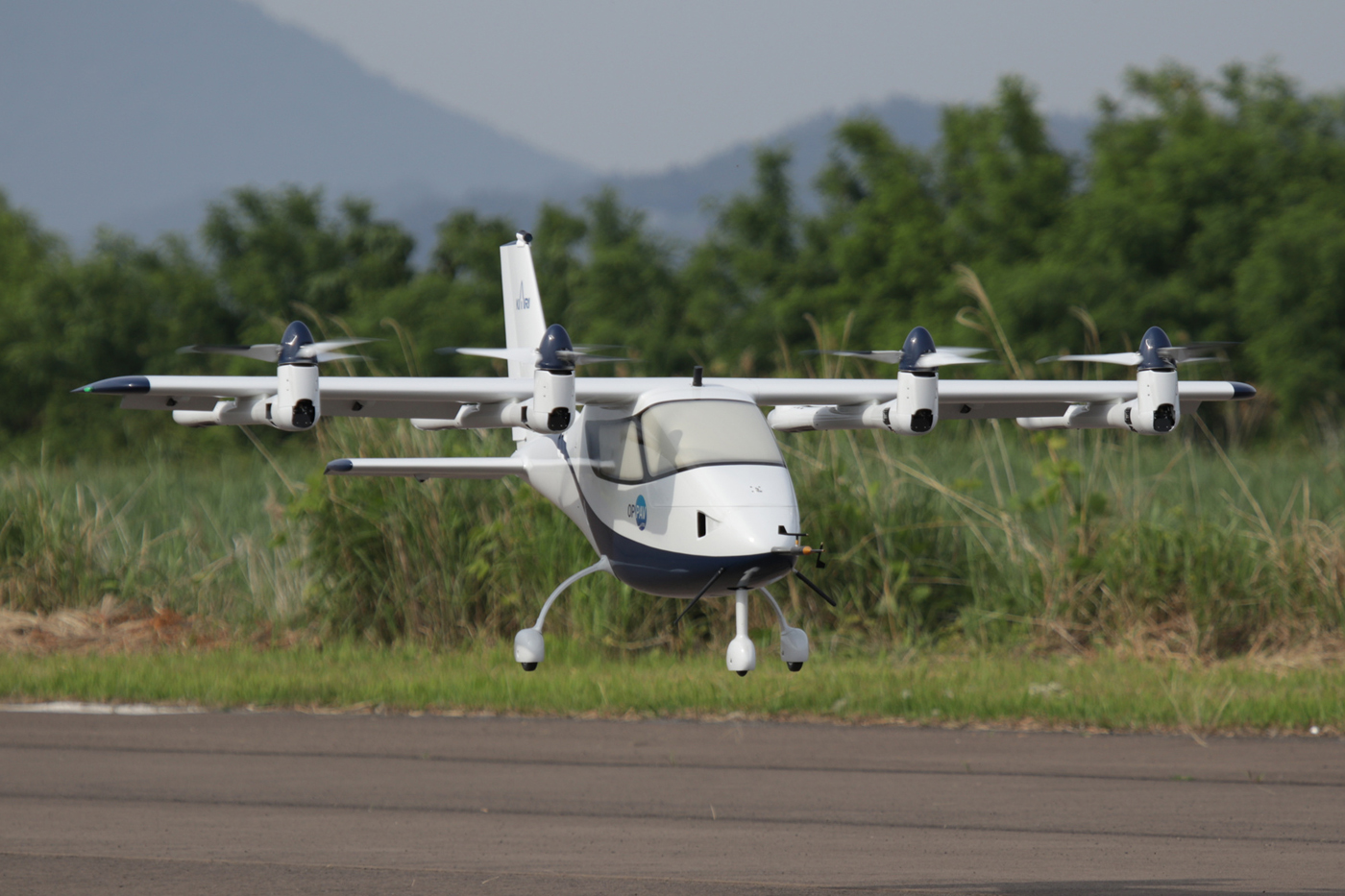
OPPAV (technology demonstrator)
Korea Aerospace Research Institute (KARI)
Daejeon, Taejon-jikhalsi, South Korea
www.kari.re.kr
The Korea Aerospace Research Institute (KARI) established in 1989, is a government-funded research institute in the aerospace industry and is located in Daejeon, Taejon-jikhalsi, South Korea. Its main office and laboratories are located in Daejeon and the flight test center is located in Goheung. The company manufacturers space launch vehicles, a lunar mission orbitor, satellites, airplances, helicopters, electric-powered helicopters, air ships, UAVs, launch control centers, launch sites, testing runways, unmanned aerial vehicle traffice mangement systems, Korean Positioning System and more. (Image credit: Korea Aerospace Research Institute)
Since 2002, KARI has developed various types of vertical takeoff and landing (VTOL) unmanned aerial vehicles (UAV), such as the KARI tiltrotors — the TR100 with a maximum takeoff weight (MTOW) of 1,000 kg (2,205 lb) and the TR60 at 200 kg (440 lb), a ducted propeller design with a MTOW of 40 kg (88 lb), and a quad-tilt prop (QTP) UAS. The QTP UAV, with a MTOW of 48 kg (106 lb) and a Vmax of 170 km/h (106 mph) is fully electric, with a hybrid variant as well. A video of the QTP UAV can be seen in this YouTube video.
In 2019, the eVTOL technology demonstrator program was launched and funded by the Ministry of Land, Infrastructure and Transport (MOLIT) and the Ministry of Trade, Industry and Energy (MOTIE). KARI leads the research and development program to develop a one-seat class electric vertical takeoff and landing (eVTOL) technology demonstrator prototype aircraft for advanced air mobility (AAM). The two ministries will spend a total of $44.8 billion KRW ($38 million USD) (January 2020 prices) to develop the aircraft by the end of 2023.
OPPAV uncrewed eVTOL subscale technology demonstrator aircraft
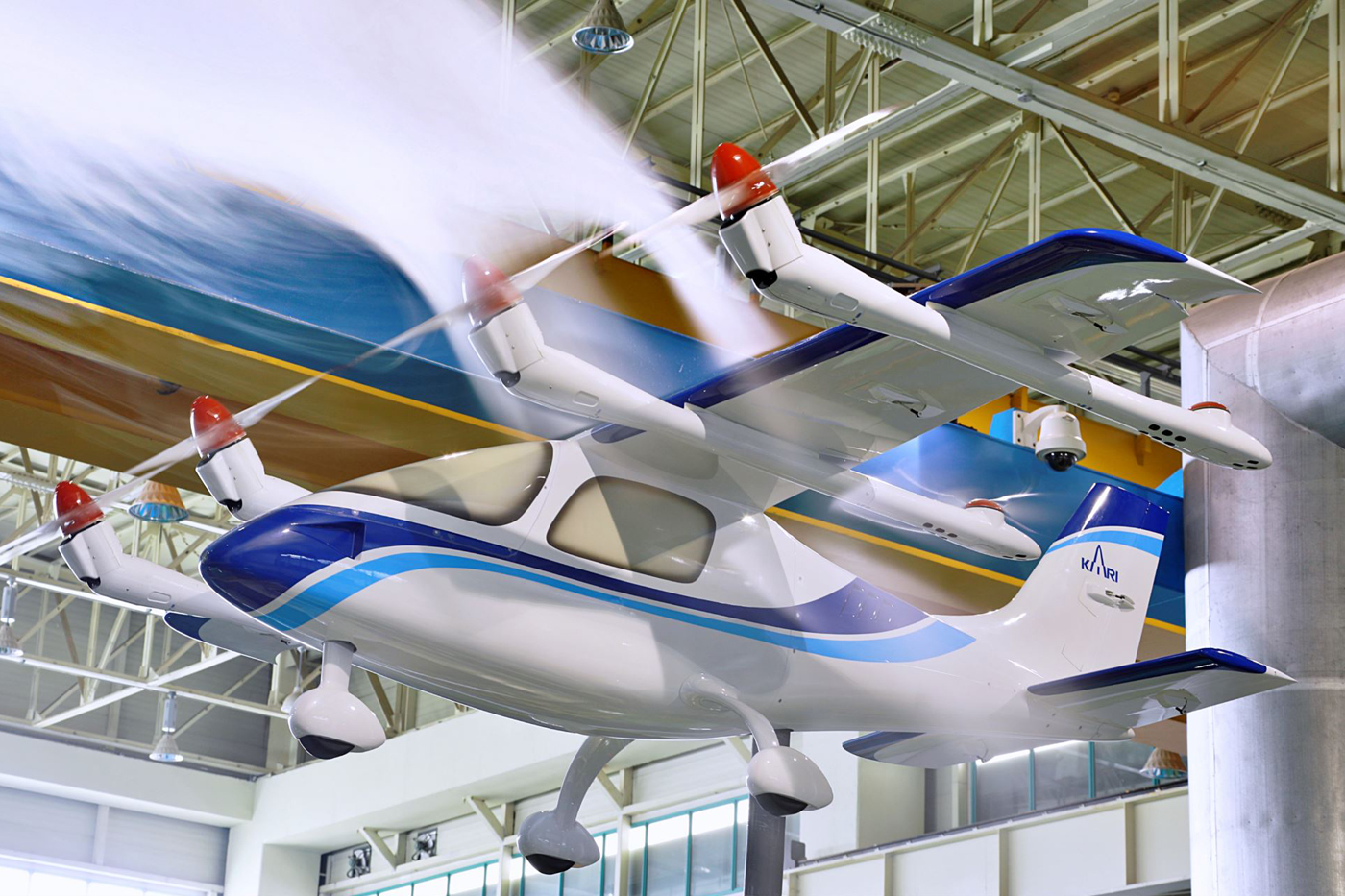
The OPPAV is an uncrewed eVTOL is a 44% subscale technology demonstrator aircraft. The aircraft is piloted by remote control and carries no passengers. The first flight of the KARI OPPAV 44% sub-scale eVTOL technology demonstrator was successfully completed in early November 2020 at Goheung Flight Test Center for many types of flight and validation tests. Additional flight tests took place in 2021. The technology demonstrator has auto hover capability and auto landing capability. If you notice, the subscale technology demonstrator has painted on windows and the full-scale prototype that few in 2023 has clear windows.
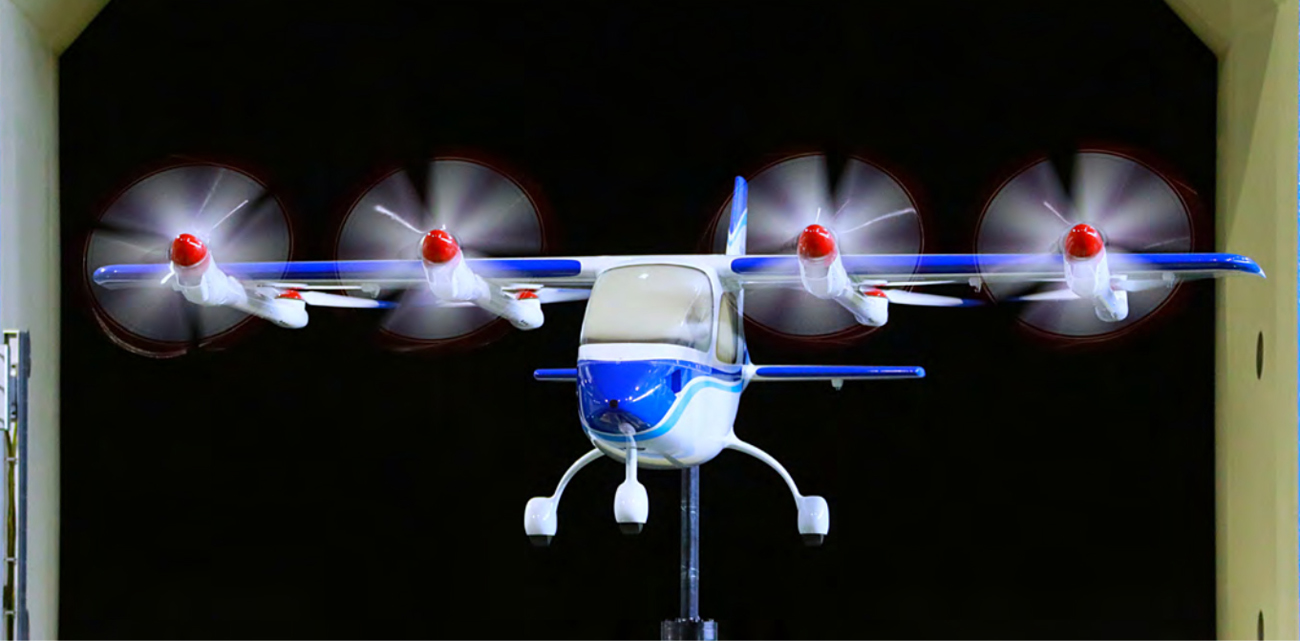
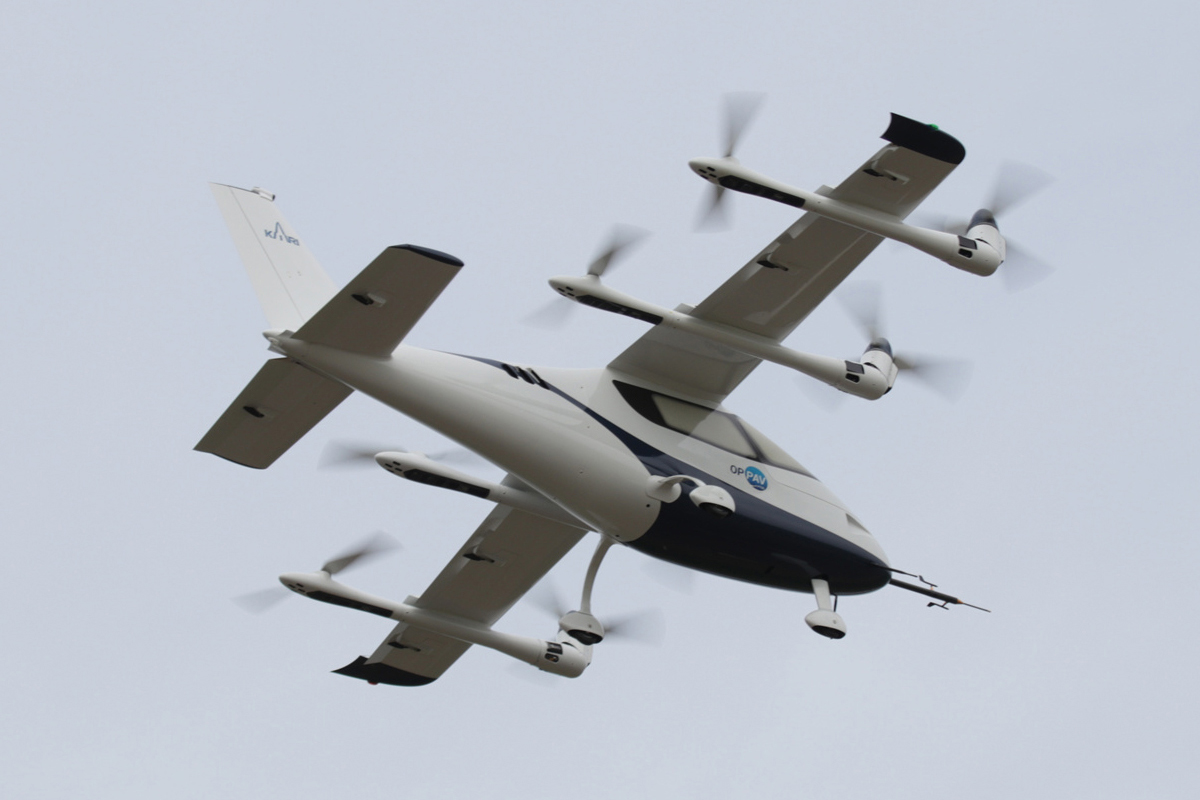
The cruise speed of the aircraft is 110 km/h (68 mph) and has a maximum speed of 125 km/h (78 mph). The range of the aircraft is 20 km (12 m) and has a maximum flight time of 30 minutes. The maximum takeoff weight for the technology demonstrator is 46 kg (101 lb). The prototype has four tilt-propellers and four VTOL-only propellers mounted at the ends of booms. The booms are mounted on the bottom of the aircraft's one high main wing and are perpendicular to the wing. There are eight electric motors powering the propellers. The aircraft is powered by battery packs.
The fuselage is made from carbon fiber composite for a high strength and low weight ratio. The aircraft has one high main wing with a wing span of 3.1 m (10 feet, 1.7 in). The aircraft has painted on windows and has a conventional tail. The aircraft has fixed tricycle wheeled landing gear.
Specifications:
- Aircraft type: eVTOL 44% subscale technology demonstrator
- Piloting: Remote control and has auto hover capability and auto landing capability
- Capacity: No passengers
- Cruise speed: 110 km/h (68 mph)
- Maximum speed: 125 km/h (78 mph)
- Range: 20 km (12 m)
- Flight time: 30 minutes
- Maximum takeoff weight: 46 kg (101 lb)
- Propellers: 8 propellers (4 tilt-propellers, 4 VTOL-only propellers)
- Electric motors: 8 electric motors
- Power source: Battery packs
- Fuselage: Carbon fiber composite
- Windows: Painted on windows
- Wings: 1 main high wing
- Wing span: 3.1 m (10 feet, 1.7 in)
- Tail: 1 conventional tail
- Landing gear: Fixed tricycle wheeled landing gear
- Safety features: Distributed Electric Propulsion (DEP), provides safety through redundancy for its passengers and/or cargo. DEP means having multiple propellers (or ducted fans) and motors on the aircraft so if one or more propellers (ducted fans) or motors fail, the other working propellers (or ducted fans) and motors can safely land the aircraft. There are also redundancies of critical components in the sub-systems of the aircraft.
Related Aircraft:
- KARI Hybrid-Electric Rotorcraft (concept design)
- KARI OPPAV (concept design)
- KARI OPPAV (prototype)
Company Insights:
Resources:
- KARI website
- KARI Facebook
- KARI YouTube Channel
- KARI Instagram
- Video: [KARI] Traffic jam OUT! private aircraft flying over the city, Kari TV, Mar. 12, 2021
- Video: Gimpo Airport → Jamsil in 12 minutes? A personal aircraft, OPPAV, appears in the city sky!, Kari TV, Apr. 10, 2021
- Video: [KARI] Successful OPPAV reducer transition flight test, Kari TV, June 7, 2021
- Video: Demonstration flight of OPPAV 44% reduction aircraft, a futuristic manned and unmanned private aircraft, Kari TV, Nov. 26, 2021
- Article: Single-Seat eVTOL Commuters, Sustainable Skies, Mar. 16, 2022

Recent Pages
- SMD Shenzhen Smart Drone UAV Bullet (production model)
- DreamFly Aerotech DF3000 Youlong (prototype)
- aeroG Aviation AG-8 (concept design)
- NASA Tiltwing-Two (illustration)
- CoolFly Urban 4 (concept design)
- CoolFly Standing Flight Platform (prototype)
- CoolFly Urban 3 (prototype)
- CoolFly Urban 2 (concept design)
- CoolFly Urban (production model)
- CoolFly Dream ST (production model)