Skybus Consortium Skybus (concept design)
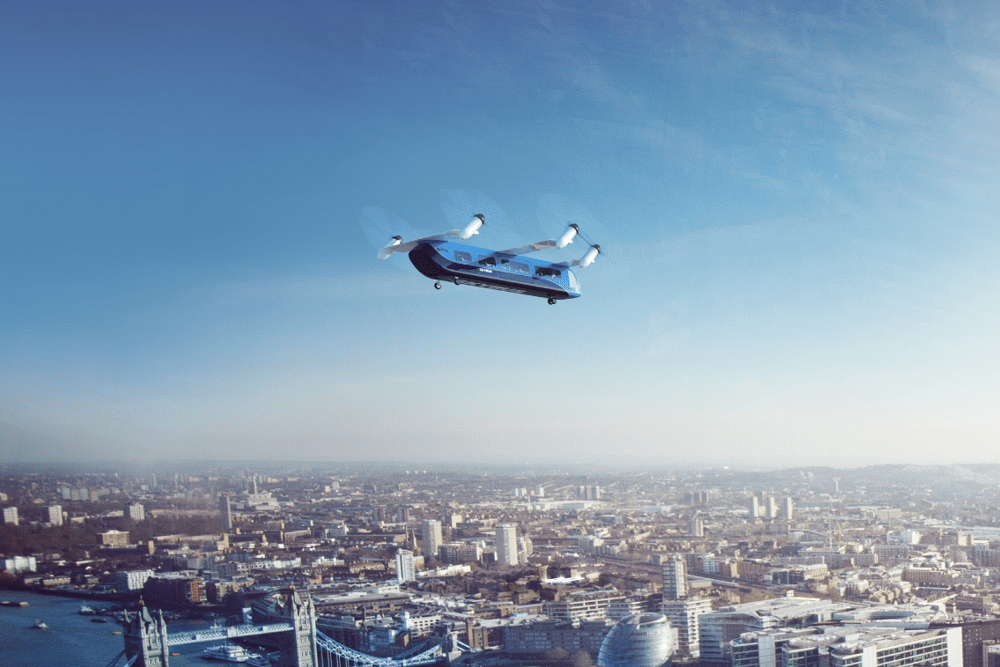
Skybus (concept design)
Skybus Consortium
GKN Aerospace, Swanson Aviation Consultancy, Pascall+Watson and Connected Places Catapult
London, England, United Kingdom
www.gknaerospace.com
GKN Aerospace was founded in the United Kingdom and can trace its origins back to 1759 during the birth of the industrial revolution. The company is a long running business known for many decades as Guest, Keen and Nettlefolds. During the 20th Century the company was mainly known for steel production but then branched out into tooling and component manufacturing. Eventually the company shifted away from steel during the 1980s and focused more on aerospace, automotive and industrial services. The company's aerospace division dates back to 1939 when they made Spitfire fighter aircraft (a short-range, high-performance interceptor aircraft) for the Royal Air Force (United Kingdom) during World War II. GKN Aerospace is the world’s leading multi-technology tier 1 aerospace supplier. As of 2023, the company employees 15,000 people working in 41 manufacturing sites across 13 countries. (Image credit: GKN Aerospace)
In 2021, the company announced it received a four-year, £125 million (GBP) ISCF program from the UK Research and Innovation to develop more sustainable aviation solutions and maintain the United Kingdom’s decarbonization goals. The company has designed and built a passenger electric vertical takeoff and landing (eVTOL) prototype for advanced air mobility (AAM).
Skybus Consortium long-range multi-passenger eVTOL concept design aircraft
GKN Aerospacem, Connected Places Catapult, Pascall+Watson and Swanson Aviation Consultancy are developing a long-range multi-passenger eVTOL concept design aircraft for advanced air mobility (AAM). Unlike other eVTOL concepts that focus on offering low cost trips for one to six passenger seating configurations, the Skybus holds many people and is geared toward the affluent class of urban, rural and regional advance air mobility transportation sectors.
The Skybus aircraft has been designed to be scalable and is planned to hold between 30 to 50 passengers and their luggage. The aircraft will be flown by one or two pilots and in the future, the aircraft will be have autonomous piloting. The aircraft will have larger than normal windows allowing spectacular views for the passengers. The aircraft boasts a high three-surface wing configuration with tilt-propellers at the end of each wing. The fuselage will be made from carbon fiber composite material to provide a high strength low weight ratio for the eVTOL aircraft. The aircraft will be powered by multiple power packs. The aircraft has tricycle wheeled landing gear.
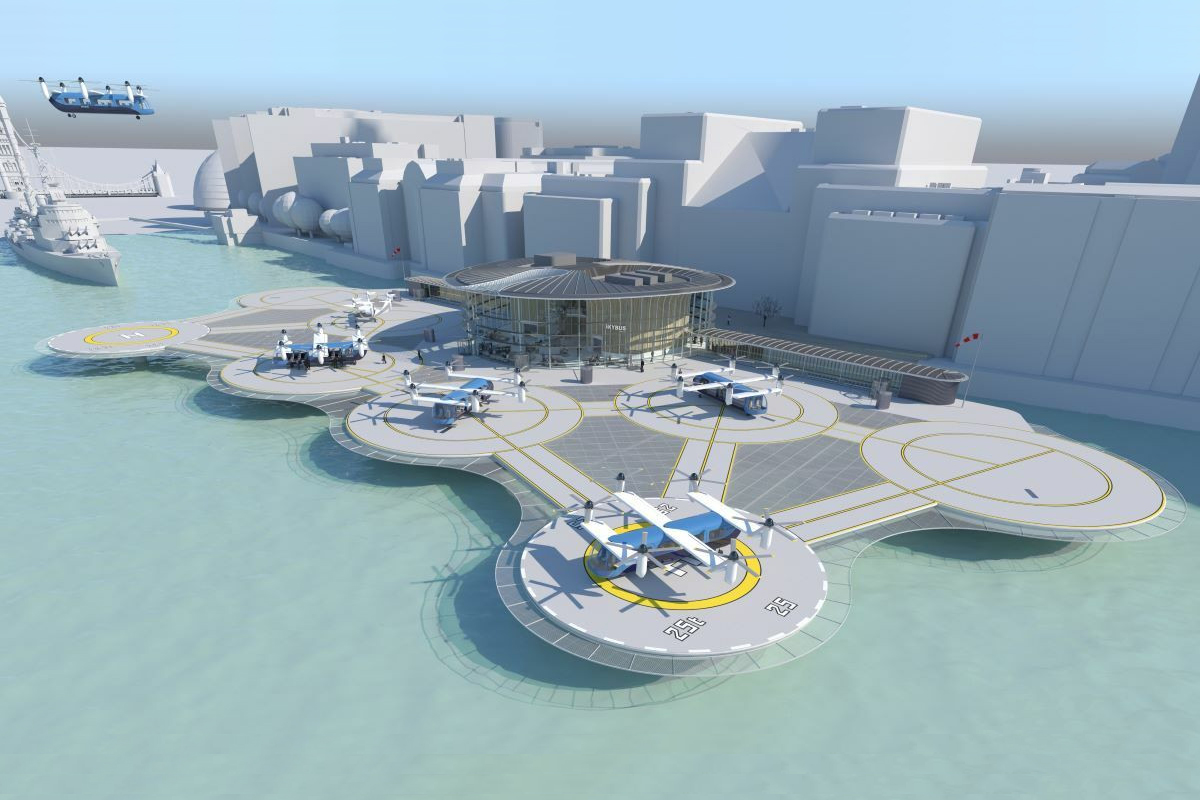
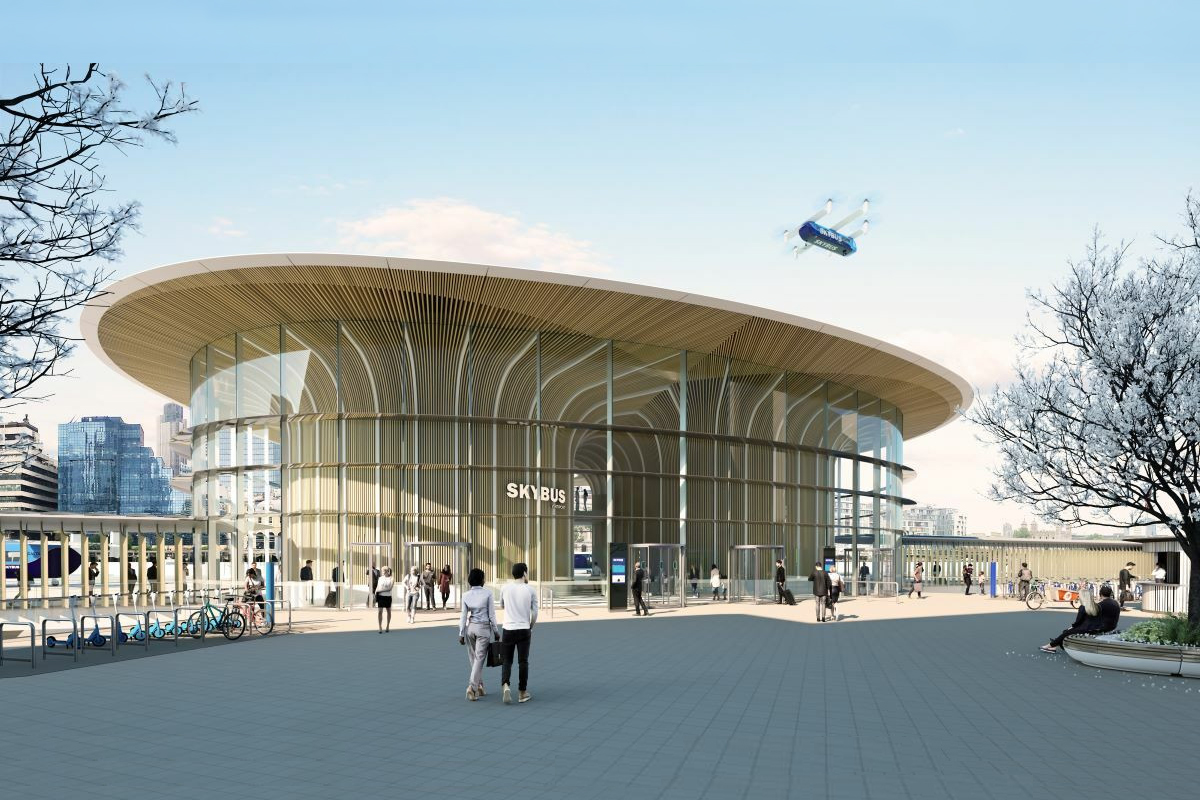
Specifications:
- Aircraft type: Long-range passenger eVTOL concept design aircraft
- Piloting: 1 or 2 pilots
- Capacity: 30-50 passengers
- Cruise speed: Unknown
- Range: For urban, rural and regional travel
- Propellers: 6 tilt-propellers
- Electric motors: 6 electric motors
- Power source: Battery packs
- Fuselage: Carbon fiber composite
- Windows: Large windows allowing forward, left and right visibility for spectacular views with a solid roof above the passenger compartment
- Wings: High three-surface wing
- Landing gear: Fixed (or possibly retractable) tricycle wheeled landing gear
- Safety features: Distributed Electric Propulsion (DEP), provides safety through redundancy for its passengers and/or cargo. DEP means having multiple propellers (or ducted fans) and motors on the aircraft so if one or more propellers (ducted fans) or motors fail, the other working propellers (or ducted fans) and motors can safely land the aircraft. There are also redundancies of critical components in the sub-systems of the aircraft.
Related Aircraft:
- GKN Aerospace CTO Challenge (technology demonstrator)
Company Insights:
Resources:
- GKN Aerospace website
- GKN Aerospace Facebook
- GKN Aerospace Twitter
- GKN Aerospace YouTube Channel
- GKN Aerospace Instagram
- GKN Aerospace LinkedIn
- Pascall+Watson website
- Pascall+Watson eVTOL Skybus Vertiport website
- Connected Places Catapult website
- Article: Pascall+Watson Revealed as Key Project Partner for Skybus, Pascall+Watson, Feb. 2021
- Article: GKN Aerospace-led Skybus collaboration project completes successful feasibility studies, GKN Aerospace, 2022
- Article: Pascall+Watson celebrate key milestone with GKN led Skybus collaboration project, Pascall+Watson, Mar. 2022
- Article: GKN-led project concludes eVTOL bus is viable concept, Aerospace Testing International, Feb. 23, 2022
- Article: GKN Aerospace-led Skybus collaboration project completes successful feasibility studies, Aero Morning, Dec. 8, 2023

Recent Pages
- SMD Shenzhen Smart Drone UAV Bullet (production model)
- DreamFly Aerotech DF3000 Youlong (prototype)
- aeroG Aviation AG-8 (concept design)
- NASA Tiltwing-Two (illustration)
- CoolFly Urban 4 (concept design)
- CoolFly Standing Flight Platform (prototype)
- CoolFly Urban 3 (prototype)
- CoolFly Urban 2 (concept design)
- CoolFly Urban (production model)
- CoolFly Dream ST (production model)